Erica Bindrim, PMHNP | Rough Patch or Time to Get Help? Teens, Adult ADHD & Your First Visit
with Erica Bindrim, PMHNP · Psychiatric Nurse Practitioner, Warrenton Mind and Body Clinic, Warrenton
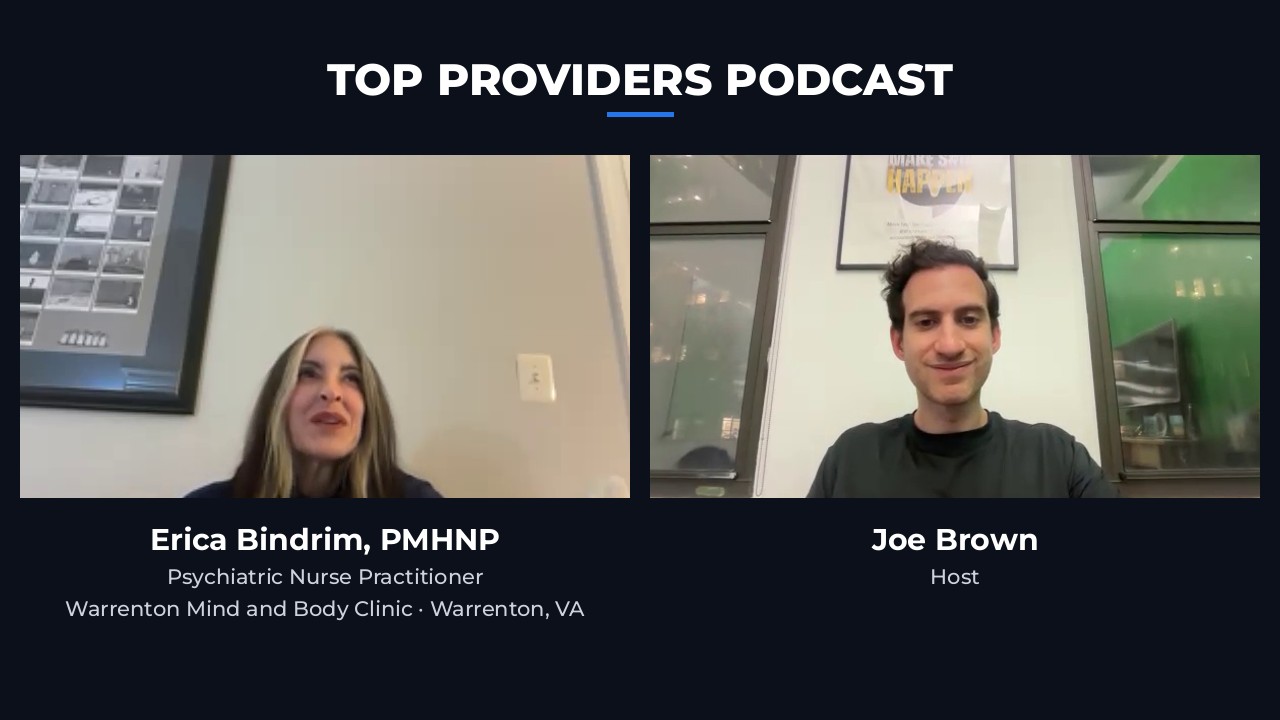
Thinking about seeing someone for anxiety, depression or ADHD, for yourself or your child, and not sure what the first appointment is really like? Erica Bindrim, PMHNP, is a psychiatric mental health nurse practitioner and the owner of Warrenton Mind and Body Clinic in Warrenton, Virginia, and has worked in mental health since 1998, in hospitals, residential programs, community clinics and private practice. She explains what to look for in a mental health provider beyond a Google rating, how to tell a rough few weeks from something that needs care, when it can't wait and you should get help right away, what actually happens at a first visit, how she includes parents while making sure teens can be honest, what an ADHD evaluation for adults looks like, how to bring up getting help with someone you love, and one everyday morning habit that can help with anxiety. Warrenton Mind and Body Clinic · 82 Main Street · Warrenton, VA 20186 · (571) 261-0597 · mindandbodyclinic.com. Find Erica on Top Providers: https://topproviders.com/providers/erica-bindrim. General information only, not medical advice. If you or someone you love is in crisis, call or text 988 (Suicide & Crisis Lifeline), or call 911. Meet the provider before you book.
- 0:00What this episode covers
- 0:53Welcome & meet Erica Bindrim, PMHNP
- 1:33From the lab to psychiatric care
- 6:34What to look for in a mental health provider beyond a Google rating
- 7:37Rough patch, or time to get help?
- 9:05When it can't wait: getting help right away
- 10:40What happens at a first visit
- 11:55Kids, teens and parents: privacy and trust
- 13:33Adults wondering about ADHD
- 15:37Bringing up help with someone you love
- 18:27One everyday habit that helps anxiety
- 19:42What to know before your first visit
- 20:22Where to find Erica Bindrim
For general information, not a substitute for advice from your own healthcare provider.
The guest
Booking details, hours and her full background live on her profile.
Clips from this episode
Under a minute each, cut straight from the interview.
 Shorts0:38
Why She'd Rather "Bore" You With Education
Erica Bindrim, PMHNP, a psychiatric nurse practitioner at Warrenton Mind and Body Clinic in Warrenton, Virginia, on why she takes her time, explains things in detail, and gives people permission to tell her when it's too much. Warrenton Mind and Body Clinic · Warrenton, VA mindandbodyclinic.com · topproviders.com If you or someone you love is in crisis, call or text 988 (Suicide & Crisis Lifeline), or call 911. General information, not medical advice.
 Shorts0:41
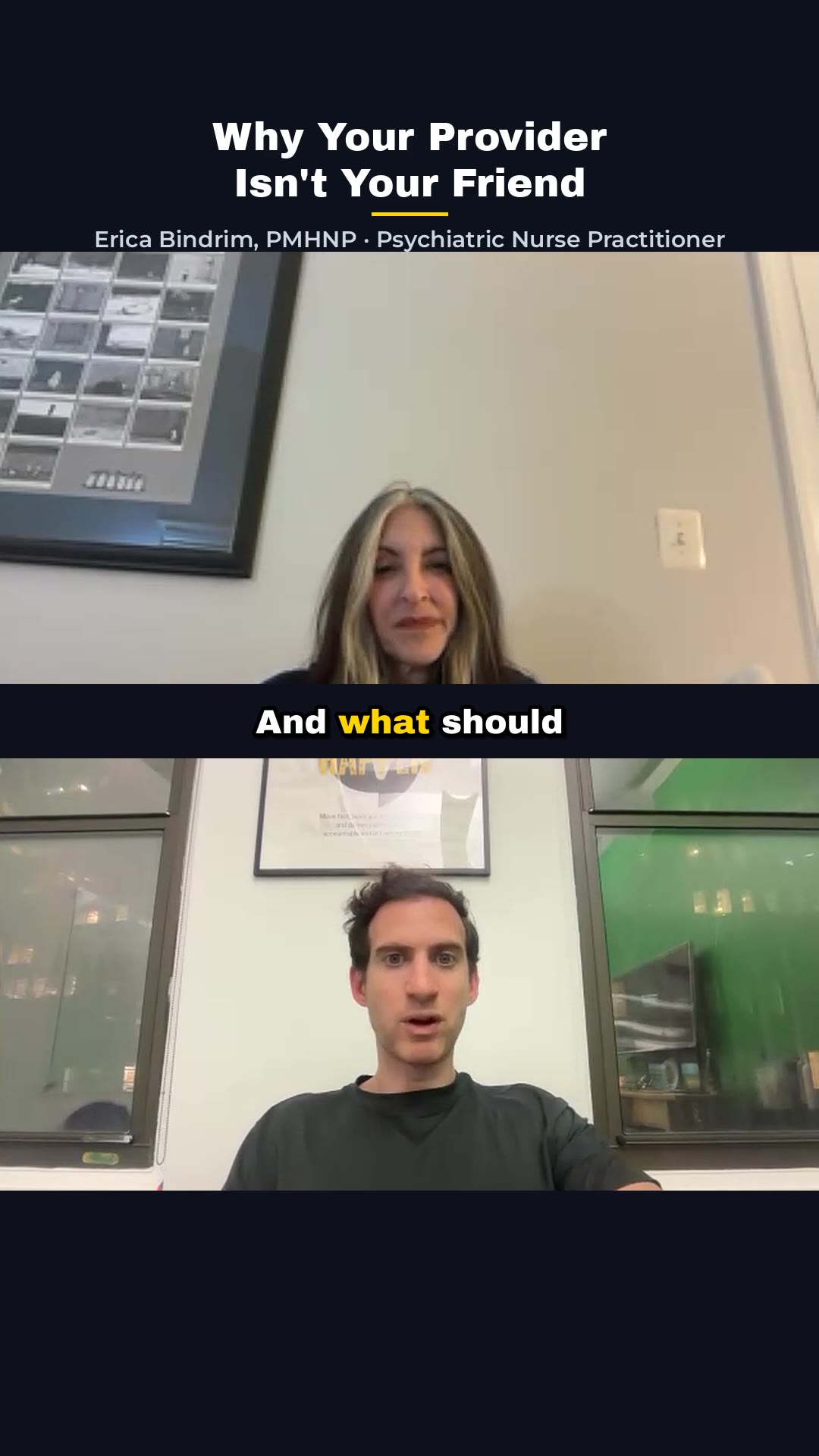
Why Your Provider Isn't Your Friend
Erica Bindrim, PMHNP, a psychiatric nurse practitioner at Warrenton Mind and Body Clinic in Warrenton, Virginia, on what to look for in a mental health provider beyond a Google rating: feeling listened to, comfortable asking questions, and able to trust them. Warrenton Mind and Body Clinic · Warrenton, VA mindandbodyclinic.com · topproviders.com If you or someone you love is in crisis, call or text 988 (Suicide & Crisis Lifeline), or call 911. General information, not medical advice.
 Shorts0:28
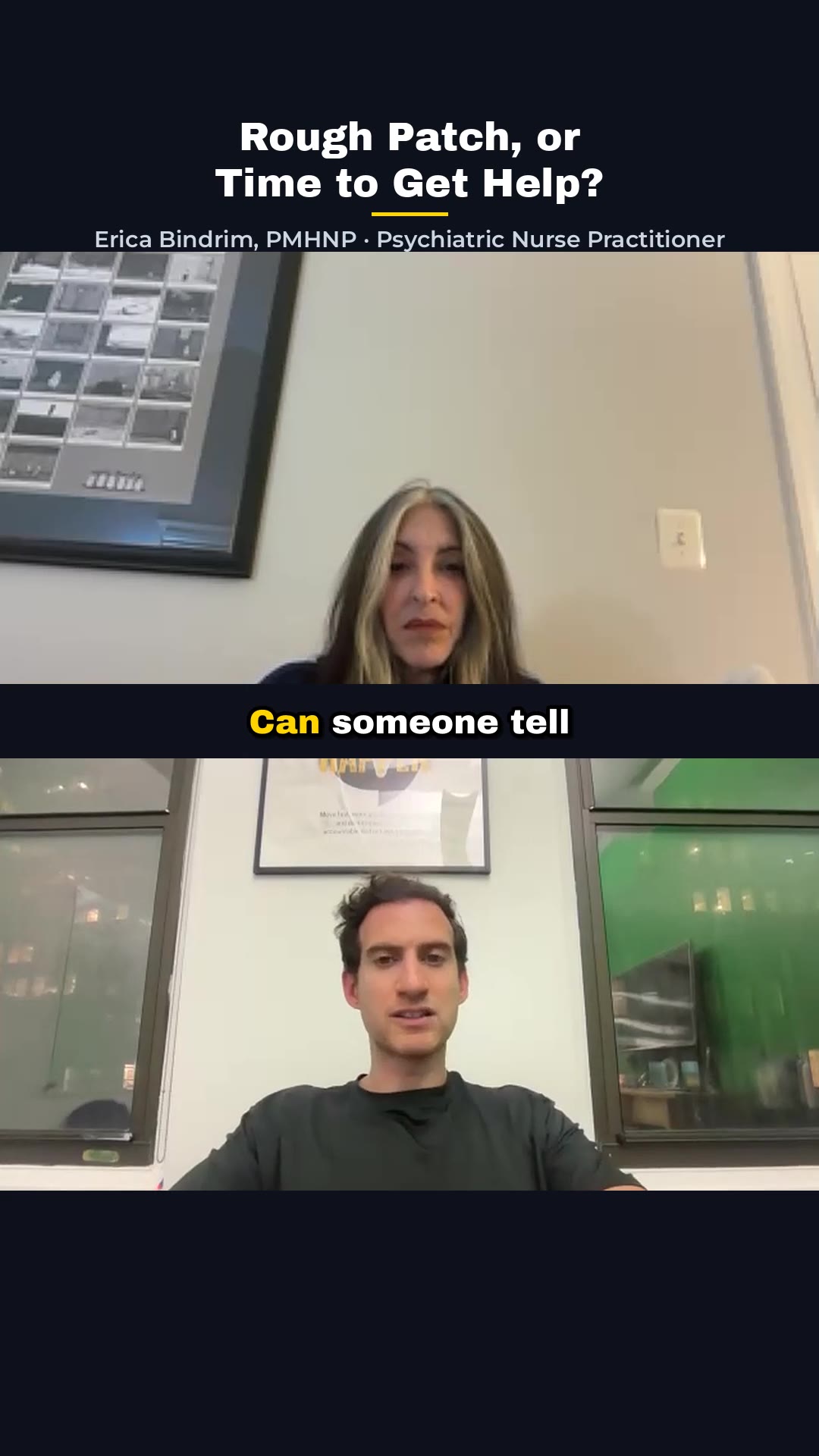
Rough Patch, or Time to Get Help?
Erica Bindrim, PMHNP, a psychiatric nurse practitioner at Warrenton Mind and Body Clinic in Warrenton, Virginia, on how to tell a rough few weeks from something that really needs care, and why patterns and circumstances matter. Warrenton Mind and Body Clinic · Warrenton, VA mindandbodyclinic.com · topproviders.com If you or someone you love is in crisis, call or text 988 (Suicide & Crisis Lifeline), or call 911. General information, not medical advice.
 Shorts0:40
ADHD Treatment Isn't Just Medication
Erica Bindrim, PMHNP, a psychiatric nurse practitioner at Warrenton Mind and Body Clinic in Warrenton, Virginia, on what an adult ADHD evaluation looks like and the options she talks through afterward, from coaching to everyday lifestyle changes. Warrenton Mind and Body Clinic · Warrenton, VA mindandbodyclinic.com · topproviders.com If you or someone you love is in crisis, call or text 988 (Suicide & Crisis Lifeline), or call 911. General information, not medical advice.
 Shorts0:39
One Morning Habit That Helps Anxiety
Erica Bindrim, PMHNP, a psychiatric nurse practitioner at Warrenton Mind and Body Clinic in Warrenton, Virginia, on a simple morning routine: getting outside in the sunlight, a breathing exercise, a walk, or caring for a pet. Warrenton Mind and Body Clinic · Warrenton, VA mindandbodyclinic.com · topproviders.com If you or someone you love is in crisis, call or text 988 (Suicide & Crisis Lifeline), or call 911. General information, not medical advice.
Transcript
Transcript of the published edit. Times are episode time. Auto-transcribed; minor errors possible. A few passages are trimmed and marked […]. General information, not medical advice.
0:00So if you're thinking about seeing someone for anxiety, depression, or ADHD for yourself or for your child, the hardest part is often just picking up the phone. You wonder whether they'll listen, whether they'll rush you, […] And a lot of people wait months, sometimes years, because they don't know what the first appointment is and what it's actually like. So today I'm talking with Erica Bindrim, a psychiatric nurse practitioner at Mind and Body Clinic in Warrenton, Virginia, who has worked in mental health for more than 25 years. We'll talk through what a first visit looks like, how she explains medication options so you can stay in control, what parents should know, and how telehealth visits really work. This is a top provider podcast where independent providers tell you how they think about care before you ever book.
0:53Erica, thanks so much for being here. I'm really glad that we're doing this one because mental health is one of those areas where people wait way too long to get help, often because they don't know what to do or what to expect. You're a psychiatric nurse practitioner at Warrenton Mind and Body Clinic in Warrenton, Virginia. They've been working mental health since 1998. You've cared for patients in hospitals, inpatients and residential programs, community clinics, private practice. You've trained at Boise State and Stony Brook.
1:25[…] So today you see patients of all ages in the office or by telehealth. So before we jump in, if you want to tell everyone a little bit about yourself, how you […] Okay, so my primary interest is in complicated cases. Children and families tend to fit that category.
1:56That tends to be a class of people that providers shy away from. There is some fear out there about working with children. […] I love it.
2:34The jump from, I guess, working in a lab, right, where your specimens don't get to talk to you. It was a big leap forward from that to working with actual human beings and helping them beyond a laboratory environment, right? Seeing what they could do for themselves. It took a couple of moves across the country for me to land in a nursing program at Boise State. I was really young and it was going to be my second career.
3:13So it took me a little bit to make that transition. […] And it's just kind of every time I moved, I had to find a different place to work, right? right? And so I ended up with a big variety, just kind of by default. And, um, now in private practice, I have kind of full control as an owner and a provider, I train other nurse practitioners as well, so that I understand the kind of care that they're giving while they're working in the facility. It's nice. It's nice to have that ability and to work with people slowly, right, at their pace. That's been very important to me.
5:25[…] So getting people to feel more empowered is probably something I focus on a lot when I'm in session, I might even bore people with education, you know, but I give them permission to tell me if it's too much, right to tell me I'm done, I don't need to learn anymore more about That's okay. And then having my own children, my own family and French Bulldogs. Let me tell you, it gives you a little bit of a different perspective, you know, so I do do that a lot as well. You know, I'll incorporate what I would want as a parent.
6:18How what I would want to know just the ability to feel like I'm making more decisions for my own family. I I try anyway to give that to the patients that are in my room so that they don't feel like they're just being dictated to. That's great. And what should someone look for in a mental health provider other than a Google rating? Certainly someone that helps you feel listened to. Someone who offers that space so that you feel comfortable asking them questions. You should absolutely be able to them questions. If you don't feel comfortable doing that, there's probably a problem in the room, right?
6:58I think that that's probably the biggest part of working with someone, feeling that you as the patient have an ability to get along with that person and you trust that person because you have to be able to have a dialogue, a good conversation. They're not your friend. They're not supposed to be, right? But you need to trust them enough to be open with problems you're having […] That's great. That's great. How can you tell or how can someone tell the difference between like a rough few weeks and something that really needs care? Has it repeated?
7:46That's a big, that's a big one to look for patterns, right? Has something like this happened before in your life? Did this just pop out of the blue? And what are some of the other circumstances going on? For example, have you lost your job? Did someone die? Are you grieving? to the relationship and add all those factors in? Certainly needing therapy is a little bit different from needing medication and hopefully people are gravitating toward a therapeutic relationship with a therapist.
8:21If they're in any situation where they feel like they're approaching crisis. um, […] So intrusive thoughts are really disruptive. They do appear out of nowhere. […] They tend to be way more scary. You're actually hearing things or seeing things. No one else is hearing them. No one else is seeing them. You're having impulse control problems You have a thought that might want to make you do something and it feels odd to you It came out of nowhere. Oh my god. Why do I feel like? taking some kind of harmful action That is something usually you you need to approach that from a more emergency situation That's definitely something you want to go to the hospital for not not something you're just going to seek a therapist for, and that would be very chaotic.
9:21And also, that would probably be the one time you would seek care in an immediate fashion if it has never happened to you before, right? If you've never had any mental health issues and something like that hits you, something's probably wrong. […] Um, if it's an emotional issue, that's repeated where you're sitting there and you're saying to yourself, Oh, I've been this depressed before. I don't want to go outside. I'm not bathing, that sort of thing. As long as it's not a situation where you feel like you're going to harm yourself or someone else, you have time, you have time to get help, real help. coming to a clinic like ours or anywhere else near you where you can see a […] Certainly if it's a mood episode that's repeated, you're going to want to take action on it.
10:41And walk someone through a first visit with you. What actually happens and how long does it take and what should they bring or think about beforehand? Sure. You don't need to bring anything. I ask a lot of questions. It's good to know what your goal is. Why are you coming to me? What kind of help do you want? I mean, of course, there's a long questionnaire and we can get to it. But if you really are wondering about something in particular, it's good to address that at the first meeting. So even though we do go through a full biopsychosocial, bring your thoughts. That's really what you need to bring. Bring your thoughts, right? Ask me lots of questions. I'll answer as many as I can as best I can.
11:28You are not immediately going to be placed on medication. I think some people are afraid of that, right? Like they come in and we start a conversation and sometimes people are like, can I just talk about it first? Please don't, don't give me, it's fine. It's fine. Let's have a conversation. Medication might not even be right for you. It's a good start though. It's, you know, we're going to form a treatment plan. It doesn't always include medication. It's okay.
11:54That's great. And you see a lot of children and teenagers. So how do you, how do you include parents while making sure the teen feels that they can be honest with you okay if they are not experienced if it's their first psychiatric assessment usually I bring the child and the parent in the room and then we […] if there is anything of concern, I absolutely will inform them. But that way the patient, adolescent in the room, understands that what they're talking to me about stays private unless it is absolutely urgent and we don't have a choice.
13:07So parents leave the room so that I can speak to the adolescent and develop some kind of a rapport because that's really important. Make sure we address their goals, their concerns, and sometimes we'll separate it out. We'll have another appointment where the parents are brought into the room, and then everybody can have a conversation about how to proceed from there.
13:31That's great. More and more adults are wondering if they've had ADHD their whole lives. What does a real evaluation look like? And what would you tell someone who's been wondering? Okay, so that happens a lot. That is really common now. […] With this license we are given the training to do an evaluation.
14:19We use the DSM, that is literally a book that we pull our diagnoses from, and we walk through the questions it's not magic I know some people make it seem like a mystery it's not there are literally a series of questions we talk about how the patient is answering them and how it might affect the diagnosis and we work at it we see whether or not they meet criteria […] if they meet criteria, we start walking through the options for treatment and it again. It's not always Medicine right we talk about medicine, of course, right and we see which ones might be more appropriate But sometimes that's not what the patient needs. Sometimes they need some executive functioning coaching.
15:19Sometimes they quite literally have taken on so much and they think they should. We talk about what's realistic for the human experience. Maybe they need some lifestyle changes. It depends. So we kind of walk through the different choices. That's great. And if someone's worried about a spouse, a parent or a grown child, how can they bring up? Bring it up to them without getting it into a fight sure, um That can be really challenging. So It certainly depends on the age. It sounds kind of strange But like and the relationship you have with the person you're concerned about right?
16:02So if it's a friend, you're probably going to want to try to keep it a little bit more casual saying things like, Hey, I'm really concerned about you. You know, I care about you. I care about what's happening. Can we talk about this? Have you noticed that you're struggling kind of delicately approaching it that way. If you're a parent, and And it's a child, and the child is really avoiding you, and you do your best to decrease the tension when you're talking to them, creating an environment where you're doing something nice, something you already know your child likes.
16:43Sometimes maybe your adolescent or child has a particular game that they enjoy or a particular meal they enjoy or a particular task they enjoy, bake something together, go build a birdhouse together, do something like that and talk to them about how they're feeling and your concerns in a deescalated situation. If it's an older adult, like let's say it's your parent, […] They don't want to be confronted with those problems and so sometimes you need to do an intervention with more than one human, right?
17:30So like let's say you're an adult and you have a sibling and both of you are concerned about a parent, you would want to talk to the parent together so that you kind of have help or support while you're engaging in that conversation because it can be very uncomfortable. If it's a spouse you do have to weigh sometimes safety, right, and if safety is a concern you wouldn't want to approach that person if they have a history of violence, certainly not alone. You'd want to make sure you had someone with you and again try to be gentle about it and approach it from the side of Hey, i'm really concerned about you um But unfortunately these days you do have to keep that in mind as well and make sure you're safe before you try to have someone Get mental health help Because it can end up being something very unwelcome That's great. and that what's one everyday habit that helps with anxiety believe it or not waking up in the morning and taking a peek at the real sunlight go outside I know it's getting cold in some places but going outside first thing in the morning and developing a good breathing exercise routine right away that actually helps to set the stage […] So you try to encourage people to do things like that. Go for a walk if you can. Get a pet if you can, right? Get a dog or a cat and do that pet care first thing in the morning. It kind of helps to set your day.
19:07[…] those kinds of exercises first thing in the morning can really help with your day.
19:42That's great. And last question I have for you, so if someone's watching this and they're thinking about booking with you, what would you want them to know before they give you a call or before they go to their first visit? Be ready to receive a lot of education. Yeah, be ready and come with questions. I'm happy to answer them. And sometimes I think people should know that when they're in the room with me, I'm not going to sit there dictating to them what they need to be doing. We'll work through it together and see what meets their needs best, because everybody is different.
20:21That's great. For anyone in Warrenton or even nearby in Northern Virginia, that's Erica Bindrim of Warrenton Mind and Body Clinic located at 82 Main Street in Warrenton. To book a first visit, you can call the office at 571-261-0597 or visit mindandbodyclinic.com. You can find her episode and her profile on topproviders.com.
20:54And if you or someone you love is in crisis right now, call or text 988 or call 911. Erica, thank you for making this all so easy to understand. And if this helped, subscribe to the Top Providers podcast so you can meet your next provider before you book. I'm Joe Brown, and thanks for watching.