Dr. Craig Gruber, DC | Pain After a Car Accident, Whiplash & Your First Chiropractic Visit
with Dr. Craig Gruber, DC · Chiropractor, Discover Integrated Health, Kennesaw
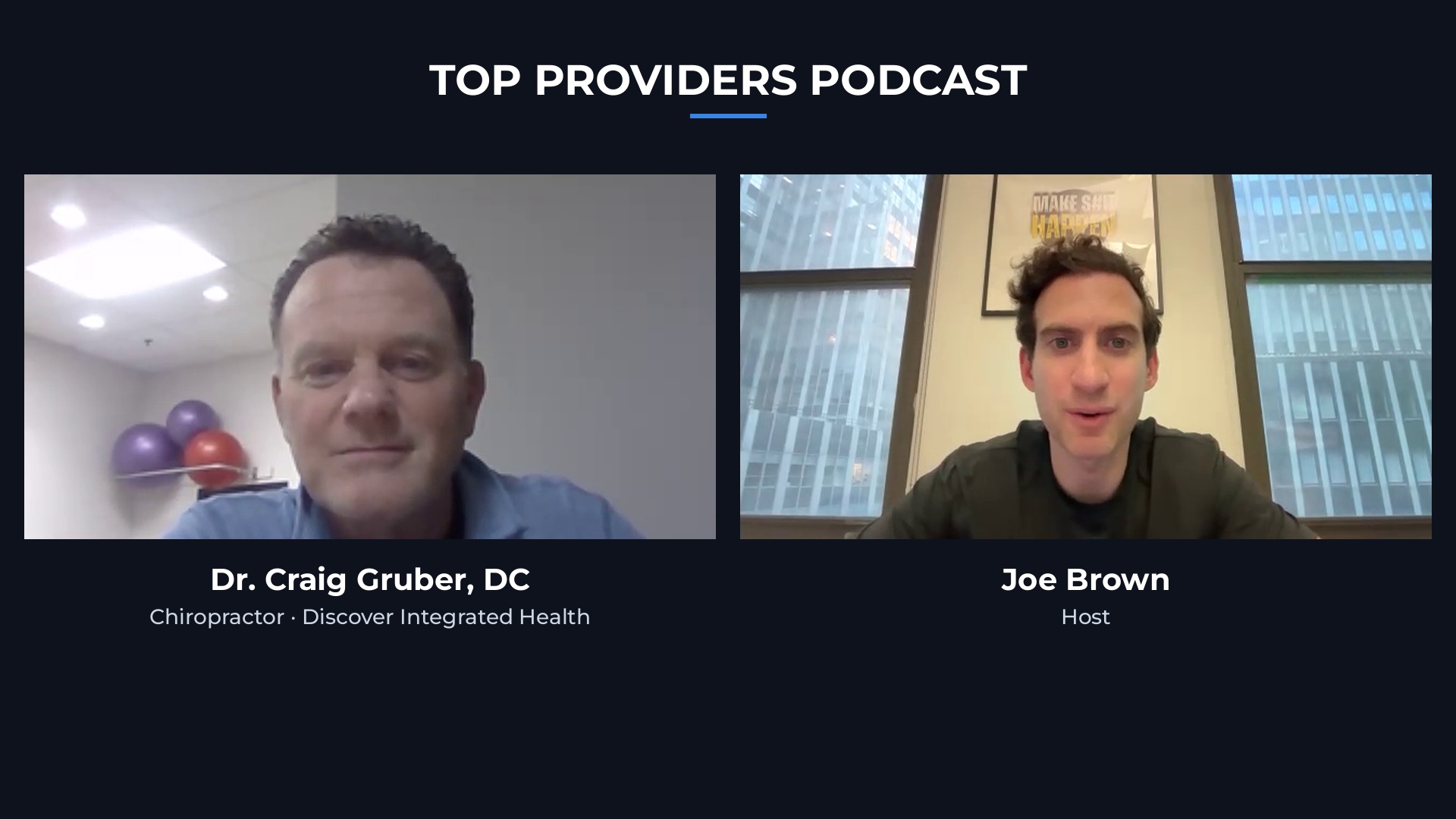
A fender bender on the way to work, a slip on a wet floor, a bad swing on the golf course: plenty of people say "I'm fine" and then wake up two days later and can't turn their head. Dr. Craig Gruber, DC, is a chiropractor and co-founder of Discover Integrated Health in Kennesaw, Georgia, with more than 30 years in practice, focused on sports injuries and recovery after car accidents. He explains why pain can show up a day or two after an accident, when to go to the ER or urgent care before a chiropractor, what a first visit looks like, whiplash in plain English, tips for weekend athletes and golfers, how spinal decompression works and who it's for, and the everyday desk and commute habits that cause back and neck trouble. Discover Integrated Health · 3940 Cherokee Street NW, Suite 402, Kennesaw, GA 30144 · (770) 423-9010 · discoverrehab.com. Find Dr. Craig on Top Providers: https://topproviders.com/providers/craig-gruber. General information only, not medical advice. Meet the doctor before you book.
- 0:00What this episode covers
- 0:31Welcome & meet Dr. Craig Gruber, DC
- 1:03What to look for beyond a Google rating
- 1:31Why pain can show up days after an accident
- 2:19When to go to the ER or urgent care first
- 3:06What happens at a first visit
- 4:16Whiplash in plain English
- 4:58Weekend athletes, golfers and getting back out there
- 6:53Spinal decompression, explained
- 8:14Working alongside your other providers
- 8:56Nervous about the popping and cracking?
- 10:10Growing up in a family of chiropractors
- 10:51Desk, phone and commute habits
- 12:02Biggest myths about chiropractors
- 13:12What to know before your first visit
- 14:03Where to find Discover Integrated Health
For general information, not a substitute for advice from your own doctor.
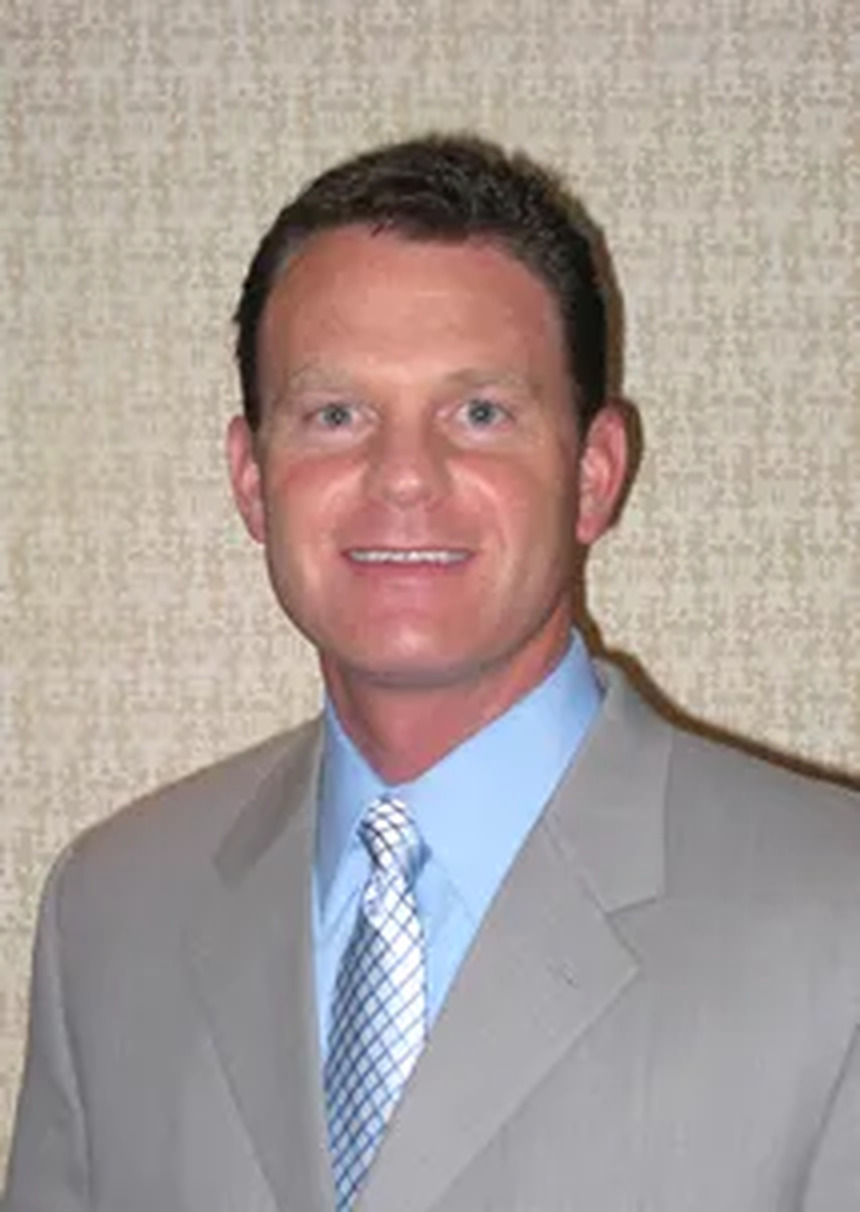
The guest
Booking details, hours and his full background live on his profile.
Clips from this episode
Under a minute each, cut straight from the interview.
 Shorts0:40
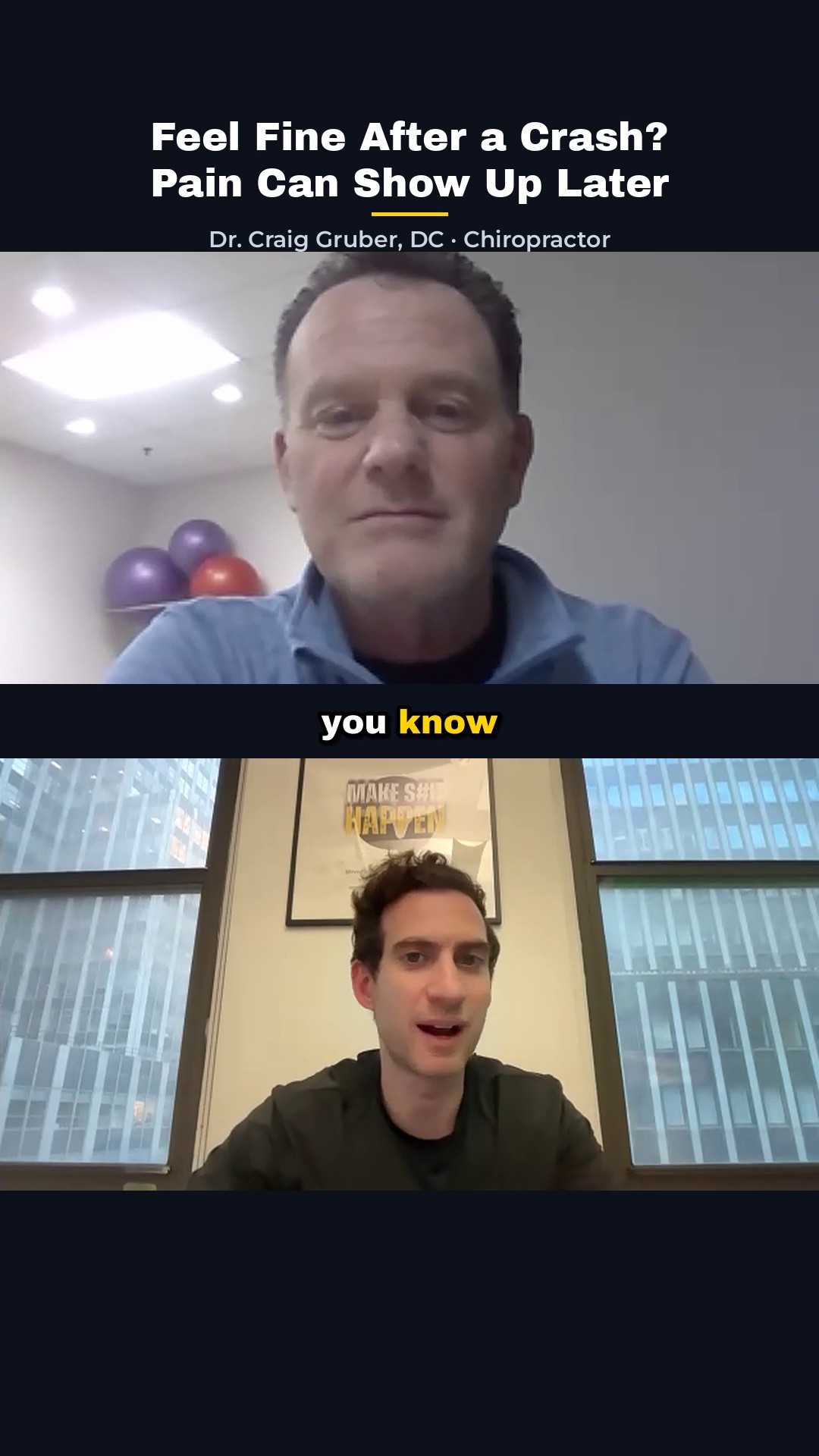
Feel Fine After a Crash? Pain Can Show Up Later
Dr. Craig Gruber, DC, a chiropractor at Discover Integrated Health in Kennesaw, Georgia, on why pain can show up a day or two after an accident, even if you felt fine at first. Discover Integrated Health · Kennesaw, GA discoverrehab.com · topproviders.com General information, not medical advice.
 Shorts0:39
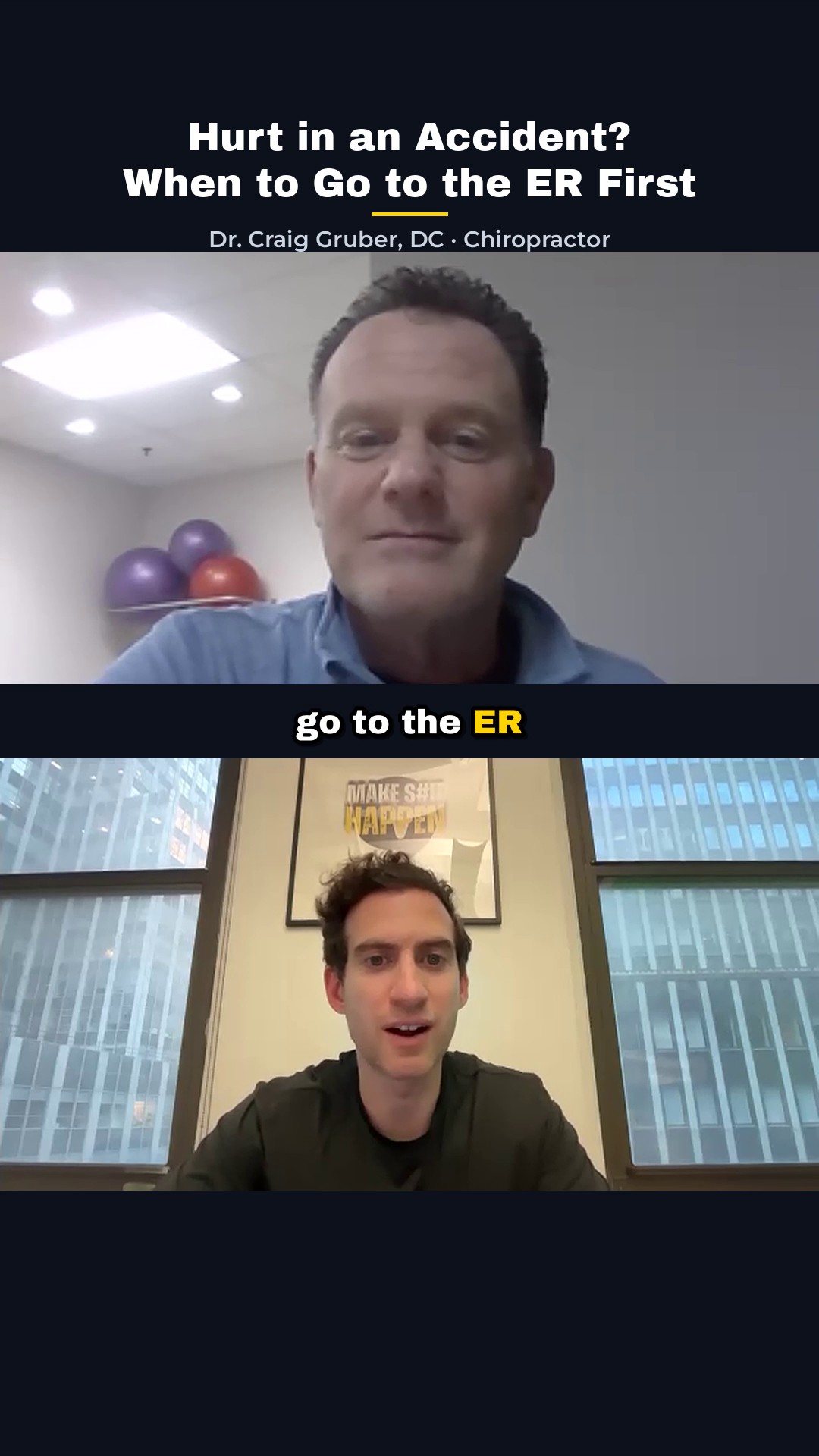
Hurt in an Accident? When to Go to the ER First
Dr. Craig Gruber, DC, a chiropractor at Discover Integrated Health in Kennesaw, Georgia, on when to get checked at the ER or urgent care before you see a chiropractor. Discover Integrated Health · Kennesaw, GA discoverrehab.com · topproviders.com General information, not medical advice.
 Shorts0:22
Whiplash, Explained in Plain English
Dr. Craig Gruber, DC, a chiropractor at Discover Integrated Health in Kennesaw, Georgia, on what actually happens to the neck in a whiplash injury. Discover Integrated Health · Kennesaw, GA discoverrehab.com · topproviders.com General information, not medical advice.
 Shorts0:38
Weekend Golfer? Warm Up Before the First Tee
Dr. Craig Gruber, DC, a chiropractor at Discover Integrated Health in Kennesaw, Georgia, on common weekend-athlete and golf injuries, and one simple habit that lowers the risk. Discover Integrated Health · Kennesaw, GA discoverrehab.com · topproviders.com General information, not medical advice.
 Shorts0:42
Spinal Decompression: Who Is It For?
Dr. Craig Gruber, DC, a chiropractor at Discover Integrated Health in Kennesaw, Georgia, on what spinal decompression is and who may be a good candidate. Discover Integrated Health · Kennesaw, GA discoverrehab.com · topproviders.com General information, not medical advice.
Transcript
Transcript of the published edit. Times are episode time. Auto-transcribed; minor errors possible. A few passages are trimmed and marked […]. General information, not medical advice.
0:00So a fender bender on the way to work, a slip on wet floor, a bad swing on the golf course, plenty of people walk away saying, I'm fine, and then wake up two days later and can't turn their head. Today, a Kennesaw chiropractor with more than 30 years of treating sports and car accident injuries, explains why pain can show up days later, what a first first visit actually looks like, and the warning signs that means skip the chiropractor and go straight to the ER.
0:27So stay with us.
0:31So welcome to the Top Providers podcast where you get to meet the doctor before you book. I'm Joe Brown. Today I'm with Dr. Craig Gruber, a chiropractor and the co -founder of Discover Integrated Health in Kennesaw in Georgia. So Dr. Gruber earned his Doctor of Chiropractic at Life Chiropractic College He comes from a family of chiropractors and has spent more than 30 years helping people recover from sports injuries and car accidents.
1:00So Dr. Gruber, thanks for joining us. Thank you. So first question I have for you is, what should someone look for in a chiropractor outside of a Google rating?
1:09Well, that's a great question. And I always say family references are the best. Ask a family or a friend that may have had some experiences that you have had and consult them. Find out who they've been to, someone in the area, someone that's close. And obviously someone who gets good reviews, but someone who, once you look at their website, kind of has the same feeling that you're looking for in a chiropractor. That's great. And after a car accident or a fall, a lot of people just say, you know, I feel fine and they go home. So why can pain show up a day or two later?
1:39And what should someone watch for that first week?
1:43Yeah, that's great. So I use the analogy of someone going to the gym. You know, you go to the gym today, right? You feel great. You get home, you shower. The next day, you feel great. About two days later, three days later, you have a hard time just lifting up your arm to brush your teeth. That's typically when muscles build a little lactic acid, the inflammation and tenderness gets inflamed into joints. Same thing with car accidents. You get that endorphin rush after an accident. and oftentimes you don't feel pain, usually within 72 hours is when the pain really settles in. The joints get inflamed, the inflammation in the muscles, ligaments that got sprained or strained. That's really when you start to notice the injuries that you sustained. That's great.
2:19And so be honest with us. So after an accident or an injury, when should someone go to the ERor to ER or, the or see a medical doctor, doctor first, before a chiropractor? Man, that's a great question.
2:29I say, if there's any question, be evaluated by a medical provider. go to the emergency room, go to urgent care right away, rule out the worst case scenario. I don't want to see the worst case scenario. I want to see the soft tissue injuries, muscles, ligaments, sprains, strains.
2:42If there's anything more than that, breaks, fractures, brain bleeds, we're going to rule out the worst case scenario. So if they do come to me even in that first day or two, oftentimes we are setting them out for advanced evaluation, whether it's from an urgent care, their primary, get advanced imaging, MRI, CTs, then we rule out the worst case scenario. And that's where we come in. So typically two, three days later, I'd like to see them as long as there's not emergency care needed. That's great, that's great. Walk someone through their first visit with you. What happens from the moment they walk in? That's great, we do a full comprehensive consultation where either myself, one of my other providers or the team members will run through the entire history of the accident. You know, what happened, when it happened, where it happened, what type of treatment and you've been doing up to that point. Then we do a complete evaluation, completing orthopedics, neurologicals, posture checks, range of motion checks. We rule out anything, again, severe that needs to get other advanced level medical treatment. Then we do x -rays, we do flexion extension x -rays to find out if there's sprained strains either in the cervical or the lumbar region. Usually takes in between half hour, 45 minutes.
3:50Once we take those x -rays to compare what the patient told us with what we felt with what the x -rays show. So typically we'll do just emergency treatment or relief treatment that very first day including muscle stem, ultrasound, ice, heat therapies.
4:04We have the patient come back later that day or the next day to go over all the the findings of the consultation, the exam, and the x -rays to determine whether or not we can help them. If we can, we tell them. If we can't, we tell them that too and tell them where they need to That's awesome. That's awesome. And everyone's heard of whiplash.
4:21Absolutely. In plain English what actually happens to your neck and what does recovery usually look like? A great question. So I just I tell people if you sprain your ankle same thing it's going to take you know six eight weeks initially for the initial healing to be it could actually be up to 12 weeks if it's ligaments tendons. Sprains and strains just typically means whenever you have an impact your head's going to move one way or the other. Typically it moves back first and then it moves forward. What it does is pull or shear or tear, strain the muscles and ligaments into the neck, causes inflammation and swelling, can cause nerve root irritation, compression. That's typical of a whiplash injury, called a flexion extension injury also. And you grew up playing just about every sport.
5:01Just about every sport, yes. So what are the most common injuries in weekend athletes and golfers, and one thing they could do to avoid them? Well, typically I tell people you should be on a great exercise stretching routine. If you're doing that, going to minimize the chance of having an injury. If you have wellness chiropractic incorporating that makes it even better. Tell people you need some stretching 20 minutes 30 minutes before their golf round. Typical injury no different than Tiger Woods. It's the sheer force in the low back from the swing. It's torsion. It's twisting. The body can handle a lot of compression.
5:33As soon as you start to add any twisting or turning the compression decreases significantly. So we incorporate that into a golf swing or a speed golf swing. It just increases the risk of injuries. So tell people warm up appropriately, make sure you're hitting the range before you go to the golf course. Just don't jump right into it with not having the flexibility in the tissue. That's definitely minimize most of the injuries that you'll experience in golf. And how do you know when it's okay to get back on the course? Well, come to your chiropractor, get evaluated, make sure that that there's not still some issue that's there with standing even though you don't have the pain of discomfort. I was tell people that the pain typically is one of the last things to show up but it's the first thing to leave right it's kind of like you don't wake up this morning with a toothache and say oh man i just got a toothache this morning no no you had a cavity brewing the last month or two or three or six to the point where it started to irritate the nerves now you woke up with the pain so oftentimes same thing in chiropractic when someone comes in in pain it didn't happen today didn't happen yesterday it may have happened weeks earlier whether it was golf or a sporting injury or an auto accident so once we start to treat a patient the pain is the first thing to go away even though the ramifications of that injury may still be there. So we want to make sure that full range of motion's back there, orthopedic checks are negative. There's no muscle spasm, inflammation, swelling. So when you go back to do the things that you did, maybe that got you there in the first place, minimize the risk of it returning right back or you re -injuring yourself. That's great. That's great, and you offer spinal decompression.
6:57We do. So plain English, what is it? And what does it feel like? And who is it for? And who is it not good for? Someone has to have a positive disc binding. So it's not your typical just back injury, inflamed, irritated, sprained strains.
7:12We have to have a positive MRIs. So when an inversum comes out, we do a consultation. We'll send them for MRIs. We will want to see if there's disc herniations, disc bulges, if there's stenosis, which is narrowing to the open where the nerve comes out, if there's actually nerve root compression, that is the perfect candidate for decompression. So what it is, it's more of a linear traction. It's based on the height and the weight of the patient. There's vibration or oscillation incorporated. So it allows the muscles and limits to relax. So what happens. It actually decompresses that disc. So when people think of stretch, it's different than a decompression so a disc again is a little bit different so muscle right you can stretch and elongate it a disc is actually like if you ever had Chinese finger cuffs you stick your fingers in there right but when you try pulling them apart that actual cuff gets tighter A disc is the same thing. The way the fibers are, they're intertwined like this. So when you pull, it actually pulls that disc back in there. It doesn't stretch the disc, it actually forces that disc to actually decompress. push that bulge or herniation away from that nerve or the spinal nerve root or the spinal canal. That's great. That's great. And how do you work with someone's orthopedist, their primary care doctor or physical therapist, so the patient isn't stuck in the middle? That's great. So we're a little bit different because we handle a lot of high - level injuries. So we get referrals from orthopedics, neurologists, neuro physical therapist on a day -to -day basis so we coordinate hand -in -hand pick up the phone we a phone call, there's a lot of documentation, whether we get from them that says what type of treatment they'd like us to perform on the patient. And we send it right back, kind of what we did, here's a prognosis, here's the update for treatment. So we actually will co -manage that patient with the provider. but we want to make sure we coordinate with that provider that makes sure we're doing exactly what the recommendations are. That's awesome. And some people are nervous about the chiropractor or going to a chiropractor, especially they hear about the popping and the cracking.
9:03So what do you tell someone who's never been? You know, I've been in practice for 33 years and more now than ever, people are less nervous. I think more and more people go to a chiropractor, so their friend or family member, mom or dad or neighbor's been, so I think that eases some of the tension. And then right now with social media, people come in like, I want that, I want what I saw, I want, you know, the way, there's a click into the traction. So it's kind of taken that out of what I've seen on a day -to -day practice. Typically people come in and they're excited to get the treatment, but if they are nervous, we have a semi -open concept, they see patients getting treated, treatment adjusted. So it's a little bit different than maybe their preconceived notion of what chiropractic is. But we just walk them through. We again, we have semi -open treatment rooms. So people feel pretty relaxed with the operation and what we do.
9:49And we, again, we have two other providers in the office and there's multiple levels of different types of techniques. Some people say, I, I wanna hear bones popping and clicking. Other people say, I don't wanna hear any of that. Well, there's so many different techniques that we can walk them through. I tell a patient, look, I'm gonna, I'm gonna tell you tell you everything I do before I do it. So there's no surprises. People don't like surprises in doctor's offices. We certainly don't want surprises in our office. That's awesome. That's awesome. And your dad and your brother were chiropractors too. So what did growing up around this about taking care of people? You know, that's all I know. It's what I wanted to do ever since I was a kid. My dad was a chiropractor, unfortunately he passed, but my brother was practicing with him for 30 plus years and is still practiced with him up in Michigan. I'm in this practice here, right outside of Atlanta, Georgia with my cousin. We've been practicing in this location for almost 30 years.
10:38So it's just kind of what we do. I grew up playing sports. So if there's an injury or soreness or stiffness, it's just my first thought is like hey let's check you out let's do it That's great. In desk and desk jobs, phones, long commutes on 75, what are some everyday habits that cause the most back and neck trouble? And what's an easy fix? Wow. Sitting in traffic, sitting on the phone. So I joke when people come in and they're hurting like, well, all I do is sit at a desk. Okay. I think I would rather see the patient who actually works out on the streets or doing construction because they're moving, they're active.
11:13Obviously they have injuries. But what these people sit in a car, sitting on the phone all all on phone the day, working on micro traumas. Just all day long.
11:24They're in certain places and a new verbiage. I say new, it's been a while. It's called text neck that we're seeing in kids that have reversible curves because they're on their phones like this all day or on a laptop and they don't look forward. They don't have the correct ergonomics. They're not doing stretching. So nowadays, I get patients say, can you give me some stretching routines absolutely we have a great great software to give them uh stretching for the neck shoulders upper back low back but right now with the internet and google people should be doing you know if i sit all day at a desk or have a three hour car ride what should i be doing break it up a little bit stop and get a coffee move bend down touch your toes but you just gotta move unfortunately people just don't move like they used to And what's the biggest myth about chiropractors? Oh wow, that's a great question. I don't get that. It used to be what I heard is people say it hurts, and as soon as they get adjusted they're smiling like, oh this is nothing like I thought. Most of the time they say it's nothing. like they thought unless they looked at the videos on YouTube or they're googling videos. Next one is maybe I hear people saying a a negative standpoint is, Oh, once you go to a chiropractor, you have to go for the rest of your life. Now we have plenty of patients. We treat an acute injury. We release them, release them to home therapy stretching whatever they want to at do home if they get re -injured we tell them to come see me if they want wellness care we do that too I joke with people you're not gonna work out and get in the best shape ever and say well I'm in the best shape ever I feel great I'm never gonna go to the gym again because your body's gonna go through the same things that got you there in the first place and I tell patients if you've had micro traumas we get you feeling great you're gonna.
12:57Gonna go back in the real world and do the same things that got here you in the first place let's that up. Well, it's wellness, whether it's home stretching, home therapy, home activity, we always got to give the patient the opportunity to not have to need the treatment. Those are probably the two biggest myths I can think of right off the bat. That's great. That's great. And the last question I have for you, so if someone's watching this and they're thinking about booking with you, what would you want them to know before their first visit? Well, we do whatever it takes to get a patient well. We handle patients just the way I would want to handle my family. Again, I've been around it my entire life. This is what I do. This is what I know. So when a patient comes in, we try treatment family. We treat them respectful. We try respecting their time. So when they do schedule, we make sure that we can get them treated in an appropriate period of time because I know everyone's time is valuable today. Again, we have three providers in this office.
13:44So many different techniques. We understand that. may be coming from different, maybe different providers, whether it be orthopedic or physical therapist, for other even chiropractors, we've got a lot of different tools in our toolbox that we'll incorporate that into their treatment and do whatever it takes to get them well, but whatever makes them feel comfortable in their treatment as well. That's great. That's great. Well, for anyone in Kennesaw, Marietta, Acworth and across Cobb County, that's Dr. Craig Gruber of Discover Integrated Health. They're located at 3940 Cherokee Street, suite four zero two in Kennesaw to book your first visit call seven seven zero four two three nine zero one zero or visit discover rehab .com and you'll find his episode and profile on top providers calm so dr.
14:38Gruber thanks for making this all so easy to understand and if this helped subscribe to the Top Providers podcast where you can meet your next doctor before you book. I'm Joe Brown. Thanks for watching.