Dr. Kevin Keyes, DC | Choosing a Chiropractor, X-Rays, Headaches & Neck Pain
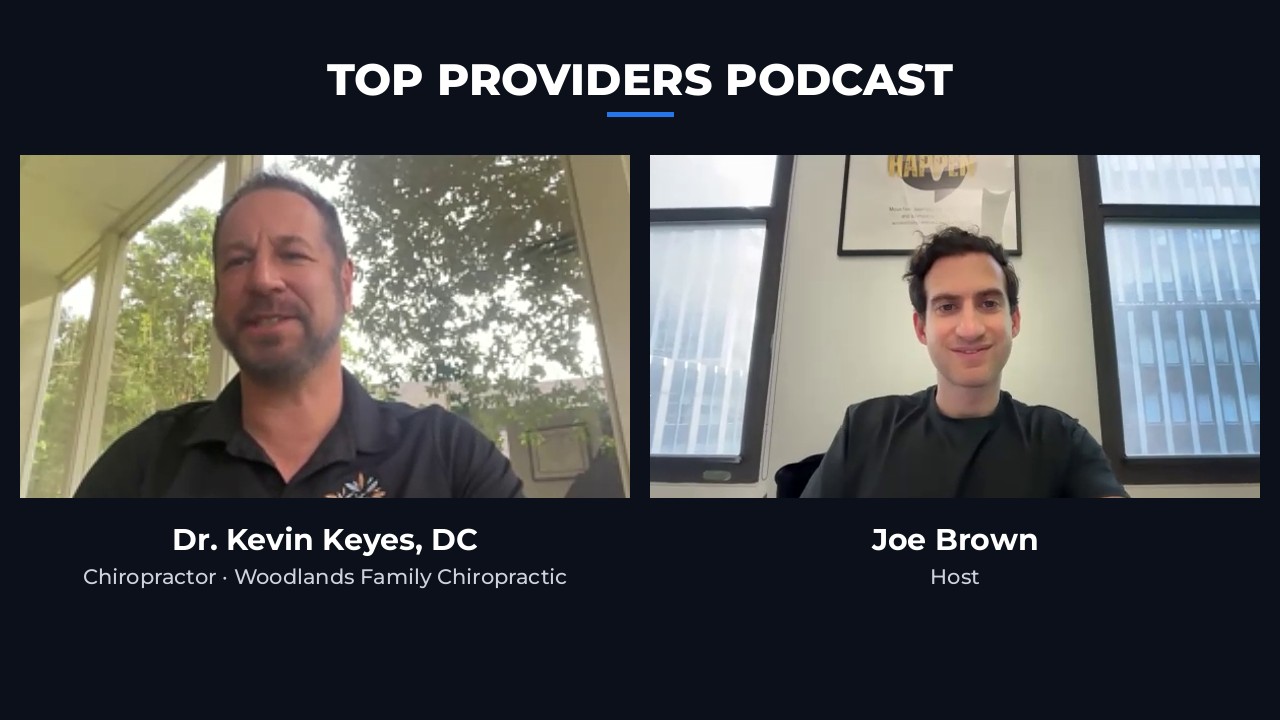
with Dr. Kevin Keyes, DC · Chiropractor, Woodlands Family Chiropractic, The Woodlands
If you've ever woken up and couldn't turn your head, or had a headache that seems to start in your neck, you've probably wondered whether to see a chiropractor, call your doctor, or wait it out. Dr. Kevin Keyes, DC, is a chiropractor and the founder of Woodlands Family Chiropractic in The Woodlands, Texas, and has cared for patients there for more than 25 years. He explains what to look for beyond a Google rating, what happens at a first visit, how he decides when an X-ray makes sense, how to tell whether a headache may be coming from the neck and when to see a doctor or go to the ER instead, what to say if you're nervous about being adjusted, simple desk and phone habits, jaw pain, care during pregnancy and for older adults, and whether cracking your own neck is a good idea. Woodlands Family Chiropractic · 1755 Woodstead Court, Suite 100 · The Woodlands, TX 77380 · (936) 447-9484 · wfcwellness.com. Find Dr. Keyes on Top Providers: https://topproviders.com/providers/kevin-keyes. General information only, not medical advice. Meet the provider before you book.
- 0:00What this episode covers
- 0:27Welcome & meet Dr. Kevin Keyes, DC
- 1:01What to look for beyond a Google rating
- 2:40What happens at a first visit
- 5:05Do you need an X-ray?
- 6:17Headaches: neck or something else, and when to see a doctor
- 8:16Nervous about getting adjusted?
- 9:13Desk, phone and sleep habits at home
- 11:19Jaw pain (TMJ) in plain English
- 12:11Chiropractic care during pregnancy
- 13:07Care for older patients
- 14:10Is cracking your own neck bad?
- 15:18What to know before your first visit
- 16:51Where to find Woodlands Family Chiropractic
For general information, not a substitute for advice from your own doctor.
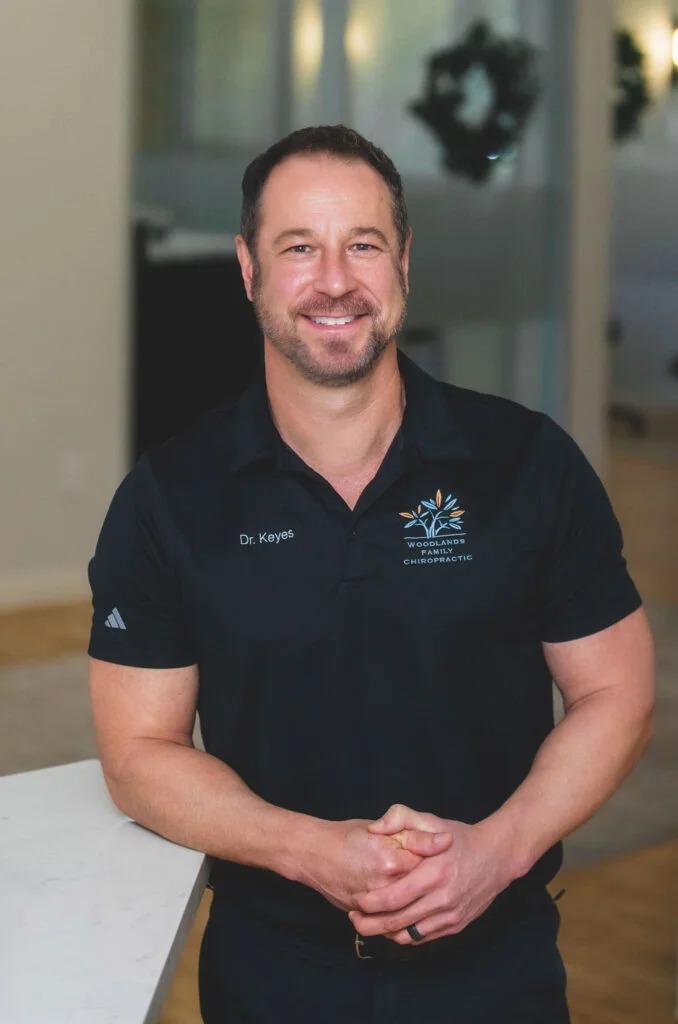
The guest
Booking details, hours and his full background live on his profile.
Clips from this episode
Under a minute each, cut straight from the interview.
 Shorts0:39
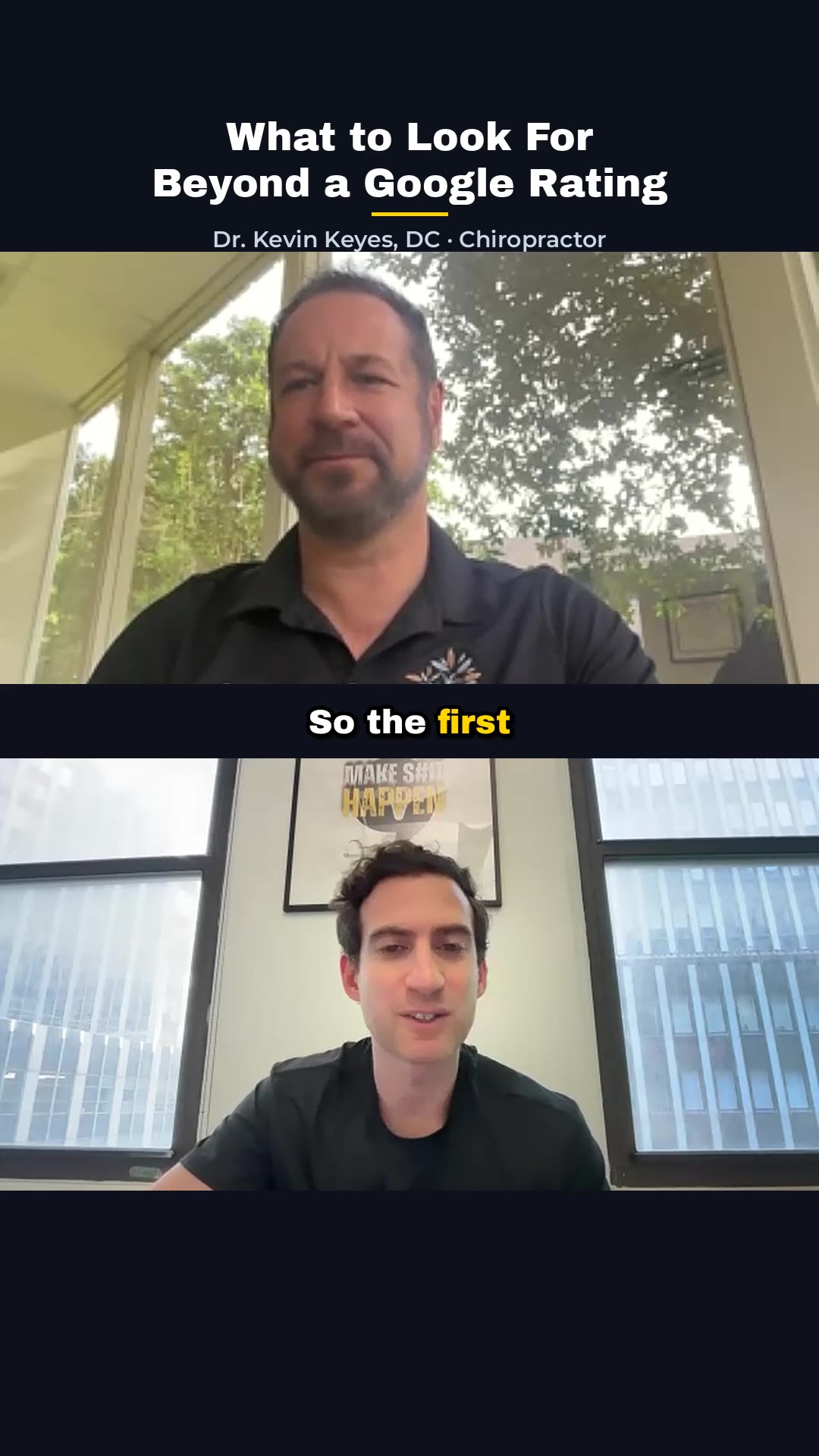
What to Look For Beyond a Google Rating
Dr. Kevin Keyes, DC, a chiropractor at Woodlands Family Chiropractic in The Woodlands, Texas, on what to look for in a chiropractor beyond a Google rating, starting with a thorough history and exam. Woodlands Family Chiropractic · The Woodlands, TX wfcwellness.com · topproviders.com General information, not medical advice.
 Shorts0:32
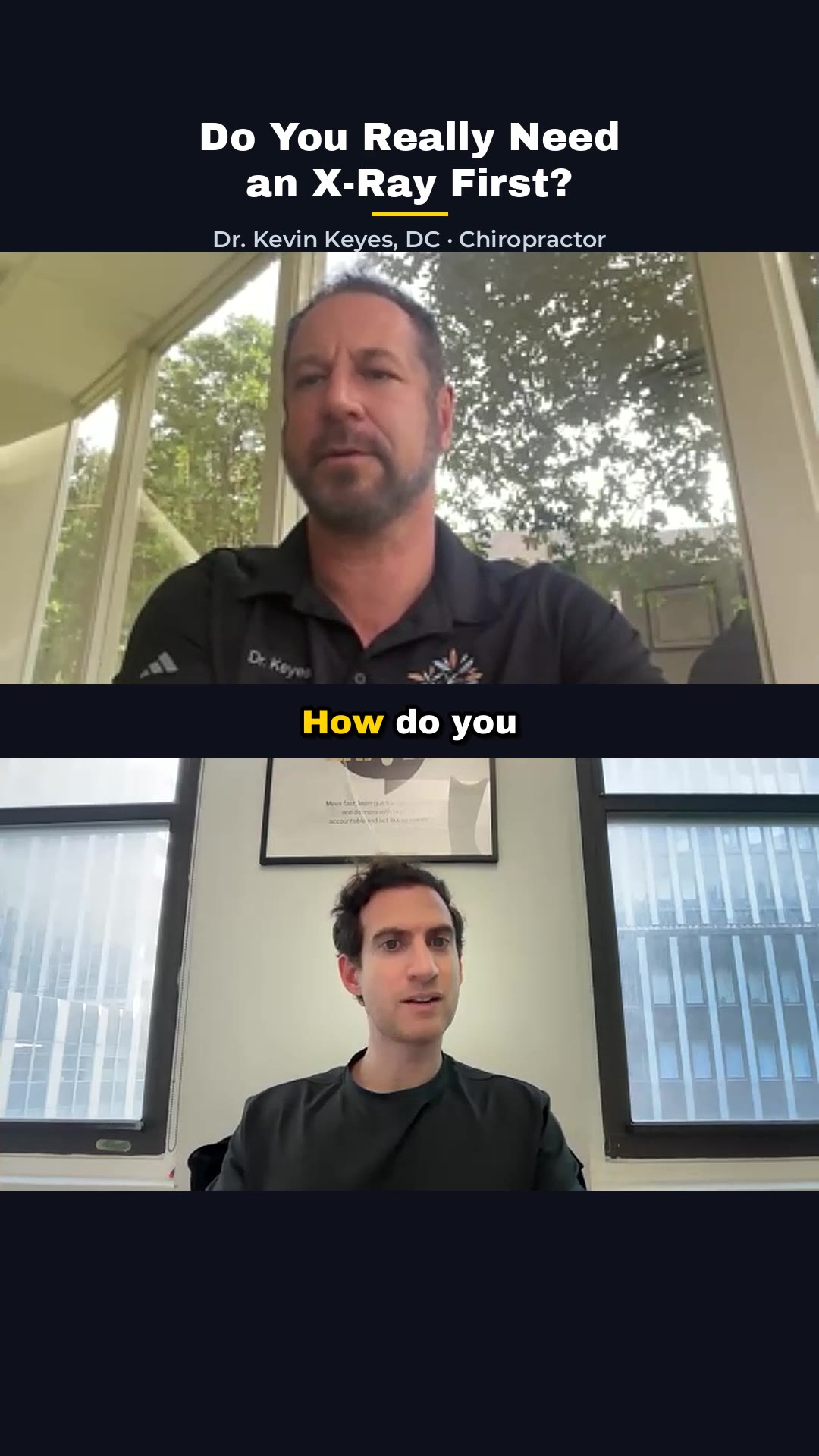
Do You Really Need an X-Ray First?
Dr. Kevin Keyes, DC, a chiropractor at Woodlands Family Chiropractic in The Woodlands, Texas, on how he decides when an X-ray makes sense before a first adjustment. Woodlands Family Chiropractic · The Woodlands, TX wfcwellness.com · topproviders.com General information, not medical advice.
 Shorts0:43
Headache From Your Neck? When to See a Doctor Instead
Dr. Kevin Keyes, DC, a chiropractor at Woodlands Family Chiropractic in The Woodlands, Texas, on how to tell whether a headache may be coming from the neck, and the warning signs that mean you should get a medical evaluation first. Woodlands Family Chiropractic · The Woodlands, TX wfcwellness.com · topproviders.com General information, not medical advice.
 Shorts0:30
Nervous About Getting Adjusted?
Dr. Kevin Keyes, DC, a chiropractor at Woodlands Family Chiropractic in The Woodlands, Texas, on what to say if you're nervous about your first adjustment, and the gentler options available. Woodlands Family Chiropractic · The Woodlands, TX wfcwellness.com · topproviders.com General information, not medical advice.
 Shorts0:42
Phone Neck: What to Do at Your Desk
Dr. Kevin Keyes, DC, a chiropractor at Woodlands Family Chiropractic in The Woodlands, Texas, on simple desk and phone habits that take stress off your neck between visits. Woodlands Family Chiropractic · The Woodlands, TX wfcwellness.com · topproviders.com General information, not medical advice.
Transcript
Transcript of the published edit. Times are episode time. Auto-transcribed; minor errors possible. A few passages are trimmed and marked […]. General information, not medical advice.
0:01So if you've ever woken up and couldn't turn your head or had a headache that seems to start in your neck, you've probably wondered, should I see a chiropractor, call my doctor, or just wait it out. Today, a chiropractor who's cared for families in the Woodlands, Texas, for more than 25 years, walks us through what a first visit actually looks like, when an x -ray makes sense, and the warning signs that mean you should skip the chiropractor and go straight to a doctor. So stay with us.
0:30So welcome to the Top Providers podcast where you get to meet the doctor before you book. I'm Joe Brown. Today I'm with Dr. Kevin Keyes, a chiropractor and the founder of Woodland Family Chiropractic in the Woodlands, Texas. Dr. Keyes is trained at National University of Health Sciences and has been caring for patients in the Woodlands for more than 25 years. everyone from kids and athletes to moms and moms -to -be and seniors.
0:56So Dr. Keyes, thanks for joining us. Thank you for having me, Joe. So the first question I have for you is, what should someone look for in a chiropractor outside of a Google rating? I guess a great question. You really want the right fit. So you have to think of what your needs are and maybe you've never been to a chiropractor so you don't really know what you're looking for.
1:22I think that first off, most people are looking for a resolution to their problem, and they need to have some reasonable expectation that We really need to evaluate something first before we can start addressing it. So I think a good start is always getting a history and finding out, you know, how long the issue has been going on, some background about the patient, maybe their family history, maybe history of prior traumas, so forth, and an examination that makes sense that's targeted towards their problem area.
1:56And, you know, a lot of times if it's necessary, imaging, especially for chiropractic, the condition of the spine, again, especially if you've had a history of some traumas in the past, we wanna take a look at something like that. If your symptomatology lines up with areas and things that we find, then, you know, then that's a great fit.
2:19[…] That's great. That's great.
2:41And walk someone through a first visit with you. What actually happens from the moment they walk in? Yeah, so we do like technology, so we try to have people address their intake forms, so we actually review those. There's nothing worse than the doctor. You take time to fill out some paperwork, and the doctor never even looks at it. We We actually encourage people to look at that or to fill that out ahead of time.
3:08We kind of have an understanding based on that of, you know, what your general concerns are as you come in. So when people come into our office, we bring them back and we sit down, we have a conversation. Just like you and I are having a conversation here now, you know, ask some questions, a little deeper, get it, once we have a good understanding of where we are, then again, that's followed by an exam that, that targets the areas.
3:37So you use the example opening up here about headaches. You know, if somebody has had a history, say 10 years ago, they had a minor, you know, minor car accident, wasn't a big deal, but, you know, they had some whiplash, their neck was stiff for a week and they never really did anything about it. Then they're pretty active they go and they work out and they started noticing some tension building and they had this chronic tension in their neck and then all of a sudden you know it's like man now I'm starting to get these headaches. Well you know an exam is going to be worth checking some of the range of motion of your neck or looking at your posture you know we're talking to a guy that sits behind the desk for, you know, 40 plus hours a week, probably not using the best posture.
4:23You know, so we look at your posture, your alignment, you know, obviously with headaches, are there any neurological concerns? And then, you know, given this guy's history here, we want to take a look at an x -ray. […] Yeah, and a lot of people wonder whether they need an x -ray before chiropractor touches them. So how do you decide when imaging makes sense and when it doesn't? Yeah.
5:11So a lot of times if you're doing manual adjustments, you really want to make sure even in younger patients you may have birth defects or anomalies that, you know, I'll have patients, I'm telling most times when people come in if if they tell me, no, I've never, I mean, I'll say, if you had anything that could have put your body out of alignment, a fall, fall off a horse, a four wheeler, you know, monkey bars, do you have a car accident? Do you have any sports injuries? No, no, no, no, no. And I said, OK, you're in the small percentage of people that haven't.
5:46OK, well, then do we still act right? We do because a lot of times, you know, most of those times we'll find something that where they have like a scoliosis and they didn't even realize they had that. So there's times where the only time a lot of times where we didn't where there's no, no recent trauma or injury, they've been under prior chiropractic care, they've tolerated it well, you know, those are times where we may not do that.
6:16That's great. Yeah, and you mentioned headaches. Headaches are one of the biggest reasons people come to see you. So how can someone tell if their headache might be coming from their neck? And what kinds of headaches means that they should see a doctor go to the ER instead? Yeah, well, I guess there's, headache is just one symptom, right? And there's different, there's all different kinds of headaches.
6:38And so cervicogenic headaches, or tension type headaches are probably the most common that are out there. Obviously, you know, it's like, okay, what what are the things are accompanying is this a really deep head, like something inside of your head that's deep, that's searing, that's like, you've had some vomiting associated with it.
7:01I mean, okay, that could be, you know, could be a migraine, but, you know, it's always nice to rule out, you know, are there any blood pressure changes? Are there any other symptoms associated with it that you're really concerned with? I have no problems in saying, let's rule out the scaries first. And, you know, if you're really having a, you a headache that's that's been a real sudden onset that's super super super intense and you're having other symptoms associated with it you probably want to go and you have a medical evaluation just to get certain things ruled out there's there are metabolic type headaches like things like you know a temporal arthritis which is a rheumatoid condition those are pretty rare.
7:52So I would say a good chiropractor should be able to evaluate and do that evaluation and let you know if you need a medical evaluation as well. So it's always good to have somebody that's experienced that's gonna take the time, number one, to do the history, do the evaluation first so that they know is this something that you know we should proceed with or not.
8:16Nice that's great and what would you say to someone who's nervous about getting adjusted maybe they're scared of the crack or getting yeah I mean that's probably nine out of ten people right if you've never had your neck adjusted I mean there's that inherent like I'm gonna put my I'm going to put my life in your hands type situation, that's normal. So your anxiousness or anxiety, it's something that you've never experienced.
8:41You've seen maybe a TikTok video or two about that. So that's a normal experience, I mean, we don't come out of the gates with this. There's instrument assisted adjusting as well, which is very gentle. So there's a lot of gentle techniques.
9:03So, you know, I'm not going to force a procedure on somebody when we've got a lot of tools in the toolbox to help them out. That's great. Well, for someone who sits at a desk or looks down at their phone all day, what's one thing that they can do at home between visits that actually does help? Yeah, so when you are in a chronic forward, what we call forward head position. So every inch that the head goes forward, you're increasing the amount of stress on your neck, on your shoulders those muscles tie right up into the base of the skull so you need to number one is stop the chronic looking down hold your phone up when you're when you're using your phone rather than looking down because you're chronically putting stress on those tissues and it's a tissue overload taking breaks from the computer you know every 40 minutes or so if you just stand up and stretch and open your chest up, bringing your head back, just even for 30 seconds, if you have that consistent break that gives those tissues a rest, you need some movement.
10:12If you're locked in on a computer for an hour straight, the tension's going to increase. So one of the things for a computer is bringing the keyboard close to you so that you're not reaching forward for it. That's a big help because that starts drawing you forward. If you're sitting at a desk, you want your back right up against the back of the chair, leaning back slightly and pulling that keyboard towards you.
10:38Those are little tips that absolutely help people. The other big thing is, you know, sleeping positions. you know, people sleep in the craziest positions. So they work at a desk all day long, then they're going and they're exercising when their muscles are already fatigued, and then they go and they sleep in a bad position.
11:01So it's not just the adjustments alone in our office. We want to teach people about good body mechanics, what good sleep position looks like, what good ergonomics looks like, what workout, you know, your body form as you're working out, and those things as well. That's great. That's great. And jaw pain and clicking is something that you see a lot. So what's going on there in simple terms?
11:26And how do you work alongside someone's dentist? test. So So with the jaw is your temporomandibular joint, which people know as TMJ. I mean, a lot of people know that. So there's asymmetries that can develop within the body. And then again, you have a lot of muscular attachments that come up. So what we commonly see and gets commonly overlooked is the muscular component.
11:52There's a disc in the TMJ well. The disc -related problems in the TMJ are much less frequent. The most frequent thing that we're seeing is muscle tension, […] and we're happy to work alongside dentists. That's great. That's great. And what's different about chiropractic care during pregnancy? How do you work with a mom's OB or midwife?
12:22It depends on what timeframe of the pregnancy. We'll see some people right from the get -go in their first trimester. So as the belly, you get these muscles relaxing and the belly's protruding forward, there's a lot of pull on certain areas of the spine. So we'll see a lot right down at the base of the spine and the pelvis, right at the transition between where the mid and lower back connect and then up and through the neck and the shoulders.
12:52So So again, you know, it all starts with an evaluation, what the goals are. […] That's great. That's great. And what about for older patients? Maybe someone with arthritis or thinning bones. How do you change your approach so care stays safe?
13:15Absolutely. So, you know, you're 18 year old, 19 year old athlete that's, you know, got a lot of muscle mass. We're going to treat him a lot differently than grandma who's in her eighties. We're probably not going to be doing the same level of manual techniques on them but there's a lot of good soft tissue and then techniques that we can use again for the spine specifically we can use instrument adjusting which is very gentle to get some joints moving better and that's always coupled in our office we have a kinesiologist that that helps patients with corrective exercises and movement patterns so big thing in that population is balanced, Balance and instability, just their general mobility.
14:03They're living, you know, it's about their quality of life. It's just not all centered around pain. great. That's great. And is cracking your own neck bad? Well, it can be. When you are cracking your own neck, okay? The question is, are you taking a specific contact?
14:28Are you moving just because you hear a crack? Does that mean that that's a segment that's specifically locked up? So we have a lot of, you know, this is really prevalent in the younger population, you know, that are using phones all the time because they have this tension and they feel like, you know, if they move their neck, I really don't like when people take their necks and are are causing force because you're putting your you're applying a stress too much stress over joints and they can become hypermobile and there's the segments that are really problematic aren't really necessarily being addressed.
15:05Can you do it? Yeah, is it is it is it super dangerous? Well, I don't know that it's it's overly dangerous. I think it becomes problematic over time and you're really not solving the issue. That's great, that's great. Last question I have for you. So if someone's watching this and they're thinking about booking with you, what would you plan to know before their first visit?
15:29So if you're, I think the big thing is that know that we are comprehensive, that we're not here to just, this isn't a novelty for us. This isn't like a little game and it's fun to make cracks in the spine. That's not us. We take what we do. It's an art of science and philosophy that we're really passionate about […] Great. That's great. Well, for anyone in the Woodlands or Spring or Conroe, that's Dr. Kevin Keyes, a chiropractor and the founder of Woodlands Family Chiropractic.
17:01They're located at 1755 Woodstead Court, Suite 100 in the Woodlands. You can call the office at 936 -447 -9484 or visit wfcwellness .com to book an appointment. You also find his episode and profile on topproviders .com.
17:26Dr. Keyes, thank you for making this also easy to understand. And if this helped, subscribe to the Top Providers podcast so you can meet your next doctor before you book. I'm Joe Brown. Thanks for watching.