Dr. Alison Basak, Dermatologist & Mohs Surgeon | Which Skin Spots Are Worth a Visit?
with Dr. Alison Basak, MD · Dermatology, Dermatology Healthcare Excellence, Lakewood
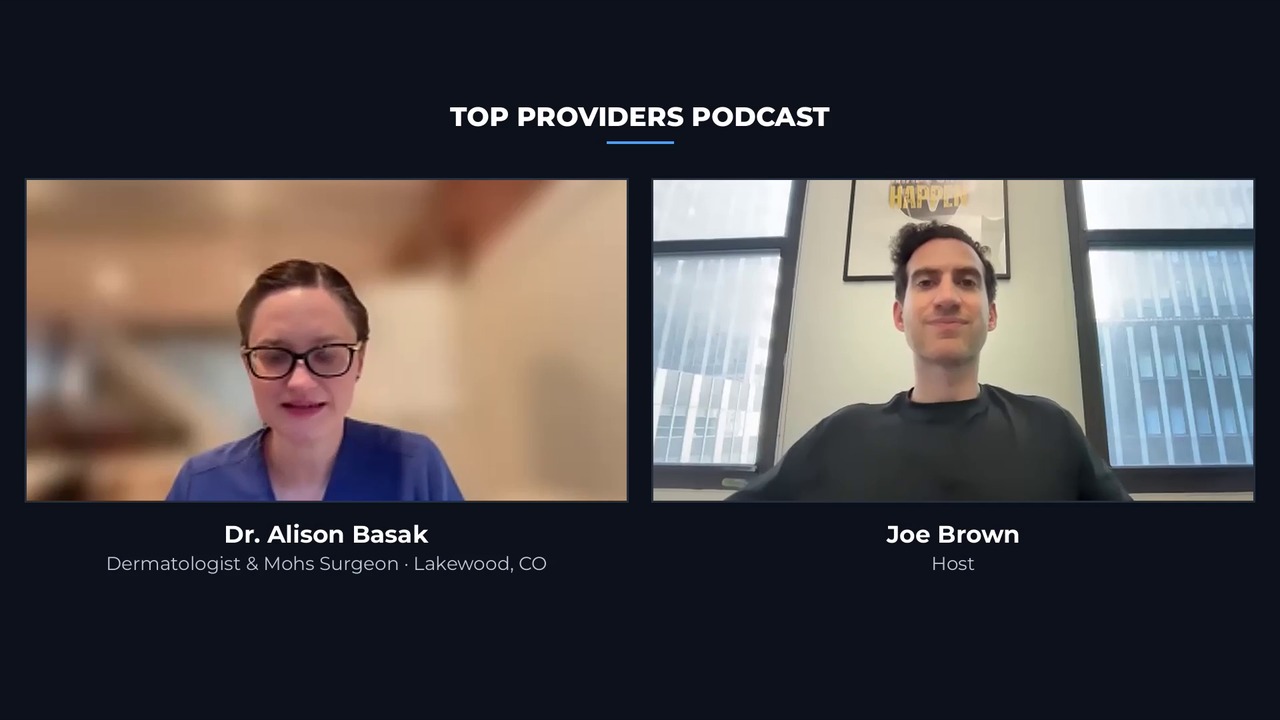
Found a spot in the mirror and not sure it's worth a visit? In this episode of the Top Providers Podcast, Joe Brown talks with Dr. Alison Basak, a dermatologist and fellowship-trained Mohs surgeon and the founder of Dermatology Healthcare Excellence in Lakewood, Colorado. She trained in dermatology at Penn State Hershey, completed a fellowship at the University of Missouri, and has cared for patients for more than ten years. They cover what to look for in a dermatologist and the green and red flags at a first visit, why you're a person and not just a diagnosis, who needs a full body skin exam and how often, what to do about a new spot in the mirror (when in doubt, get it checked), when skin problems can be a sign of something internal, adult acne, the daily sunscreen habit many people skip under the Colorado sun, seeing patients in Spanish, and choosing between a dermatologist and a spa for cosmetic treatments. General info, not medical advice, and not a substitute for care from your own provider. Dermatology Healthcare Excellence · 9600 W Jewell Ave, Suite 3, Lakewood, CO 80232 · (720) 778-3376 · dheskincare.com Meet Dr. Basak on Top Providers: https://topproviders.com/providers/alison-basak
- 0:00You're a person, not just a diagnosis
- 0:04What this episode covers
- 0:39Welcome & meet Dr. Alison Basak, dermatologist and Mohs surgeon
- 1:17What to look for in a dermatologist
- 1:55Green flags and red flags at a first appointment
- 4:13Who needs a full body skin exam, and how often
- 6:07A spot in the mirror: when is it worth a visit?
- 6:59Common reasons people see a dermatologist
- 9:45Adult acne
- 11:32Colorado sun: what people get wrong about sunscreen
- 13:28Seeing patients in Spanish
- 14:47Dermatologist vs. spa for cosmetic treatments
- 17:49What 'not just a diagnosis' looks like in the office
- 20:41Where to find Dr. Basak
For general information, not a substitute for advice from your own doctor.
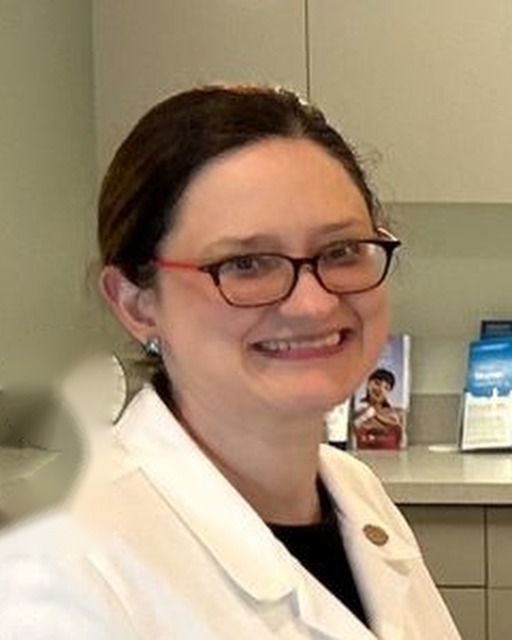
The guest
Booking details, hours and her full background live on her profile.
Clips from this episode
Under a minute each, cut straight from the interview.
 Shorts0:39
You're a person, not just a diagnosis
Not every skin cancer has to be treated right away. Dr. Alison Basak, a dermatologist and Mohs surgeon at Dermatology Healthcare Excellence in Lakewood, CO, says a good dermatologist explains what a diagnosis means and looks at the whole person, including where you are in life and what you want. General information, not medical advice.
Shorts0:41Who needs a full body skin exam?
Dr. Alison Basak, a dermatologist and Mohs surgeon at Dermatology Healthcare Excellence in Lakewood, CO, suggests getting at least one baseline skin exam, especially from your 50s on. Your back, your scalp, the backs of your legs and the backs of your ears are places you can't easily see yourself. General information, not medical advice.
Shorts0:27New spot in the mirror? When in doubt, get it checked
Not sure whether a spot is worth a visit? Dr. Alison Basak, a dermatologist and Mohs surgeon at Dermatology Healthcare Excellence in Lakewood, CO, says when in doubt, get it checked. If there's uncertainty, a biopsy lets the doctor look at it under the microscope. General information, not medical advice.
Shorts0:35Why adult acne catches people off guard
Acne isn't only a teenage problem. Dr. Alison Basak, a dermatologist and Mohs surgeon at Dermatology Healthcare Excellence in Lakewood, CO, explains that hormones play a big role in adult acne, especially for women, and it often sticks around until menopause. Ask your dermatologist about options. General information, not medical advice.
Shorts0:38Dermatologist or spa for cosmetic treatments?
Spas aren't bad, says Dr. Alison Basak, a dermatologist and Mohs surgeon at Dermatology Healthcare Excellence in Lakewood, CO. For more complicated cases, darker skin tones or people at higher risk for scarring, it can help to have the option of cosmetic treatment with a doctor. General information, not medical advice.
Transcript
Transcript of the published edit. Times are episode time. Auto-transcribed; minor errors possible. A few passages are trimmed and marked […]. General info, not medical advice.
0:00The whole person, you're a person not just a diagnosis, that's important. So most skin cancers are found the same way. Somebody notices a spot that looks a little different, it has to decide whether it's worth the doctor's visit. If it turns out to be cancer on your face, the next question is usually, what is it going to look like when it's gone?
0:19So Dr. Alison Basak is a dermatologist and surgeon who does both jobs, removing the skin cancer and putting the face back together afterwards.
0:29Today we're gonna talk about which spots to worry about and how to protect your skin in the Colorado sun. So stay with us. Welcome to the Top Providers Podcast where you get to meet the doctor before you book. I'm Joe Brown. Today I'm with Dr. Alison Basak, a dermatologist and fellowship trained skin cancer surgeon and the founder of Dermatology Healthcare Excellence in Lakewood, Colorado.
0:56Dr. Basak […] trained in dermatology at Penn State Hershey and completed a fellowship in surgery at the University of Missouri. She has been caring for patients for more than 10 years. So Dr. Basak, thanks for joining us. Thank you. It's good to be here. So, my first question I have for you, what should someone look for in a dermatologist […]?
1:26Um, I think that you want someone to take the time to... To go through what your diagnosis means, what your options are when it comes to treating skin cancer since that's sort of what we're talking about specifically right now and who's gonna those options.
1:49Goals are for treatment, where you're at in life, and what your healthcare care care are. And what's like a green flag at a first appointment with a dermatologist and maybe what's a red flag?
2:02So with skin cancer in particular, I think it's really great to have a dermatologist that sits down with you explains what your particular cancer means what the prognosis usually looks like, and then gives you sort of the standard of care, like what expected treatment usually is. I Kind of asks you what your interests are, when it comes to treatment, um I think a red is when someone just kind of glosses through the actual meaning of cancer because it's a scary word. And so for dermatologists, I think, and just honestly like skin cancer docs in general.
2:49We get used to it. We kind of get like in that word means and it's just like oh skin cancer it's okay, but if you've never for or if you have.
3:06It's scary, even if you have a basal cell skin cancer, which is the most common, the least aggressive.
3:12If you don't know much about about it you don't know and even if you do know that it's still a scary word because it's still a cancer. Right. So I think it's important to have someone that acknowledges that and helps what it means in terms of your to your overall health and then what your options are and you are in life too, because not every skin cancer has to be treated. And I think that's a really important point for especially older patients who are like in their late 80s or their early 90s and they have a really tiny skin cancer on their back that's a basal cell skin cancer that's superficial you know and they're they don't want to do anything about it you know what fine watch it. You know, you don't have to. So it's important to kind of, the whole person, you're a person not just a diagnosis, that's important.
4:13And who should be getting a full body skin exam and how often everyone I think uh certainly once you kind of hit middle age and um you know kind of for the purposes of skin cancer check usually like 50s and above like you want to have at least one skin exam sort of as a baseline and then um Kind of, from there, your dermatologist can give you an idea of how often it's necessary to come back once you've had a line. For some people, it's going to need to be every year in an annual thing. If you've got... You know, just either better inbuilt skin protection because you're of a darker skin tone or you've been really great with skin protection your whole life, you might not need to be seen every single year, you know, maybe every other year is a reasonable cadence.
5:01But I think getting a baseline is always good, especially because your back, your butt, the backs of your legs, you can't see those areas. You're scalp, you don't know what's happening up there.
5:13And a lot of people have no idea. A lot of the skin cancers that I have found have been in those areas or the backs of the ears. People are like, oh, I didn't even know that was there. And And then for people that have a strong family history, they should start earlier, especially if it's a melanoma. Usually I think people in their, you know, young adult years, like 20s or 30s, depending on when their parents had their skin cancers.
5:40Anyone that's on immunosuppressing medication needs to get started when they start their immunosuppressing, medication organ transplant patients need to be watched extremely closely, like three to four times a year.
5:51And if you've had a ton of sun damage, you use You know, tanning beds, you need to get seen a lot.
5:57So you know if someone noticed out come in always better to be told that you're okay then you know miss something definitely definitely someone notices a spot in the mirror tonight how do they know whether it's worth a visit Again, I would go back to my previous comment. When in doubt, get it checked.
6:22The internet I think it's really helpful, You know, I think artificial intelligence is always a nice place to start if you're just not sure and you have no idea, but if there's any question.
6:36Always better, to know and have someone who's an expert who has seen these all the time, who knows what they're doing, There's no substitute for that.
6:47If we're uncertain, then we biopsy, see it and we look at it in the microscope and then we can tell you for sure.
6:54So check it.
6:57That's great.
6:59And.
7:00What's the most common reason people come to see you? And what do you wish they were known sooner?
7:07So I do a little bit of everything so I. So I do do a lot of skin checks and skin cancers just. That's been my training and I have in the past done a lot lot of skin cancer surgeries. I also do a lot of general dermatology now that I've kind of gone on in my own practice. So I see a lot of acne, a lot of psoriasis, a lot of hair loss.
7:30And a lot of autoimmune diseases um when it comes to what I wish people um knew um think more than anything it's that there's a lot more to to the skin than just like and words and when you have a, sometimes it can be and a sign of something much more internal is the skin is kind of the only organ that you can see without any kind of special imaging and So many diseases have signs and symptoms up in skin, so in dermatology one of the things that makes it fascinating and fun for the the the the the the.
8:20And also a little scary is that you have to be aware of those possibilities and so if something, I if, if something has come and it has persisted and it's kind of not gotten better or not gone away, don't write that off. Don't ignore that.
8:41It can be a sign that something more is going on, it could be a sign that you have, you know, eczema or something else like that, but which in and of itself can be a really debilitating disease. But it can also be a sign that me or you have and really more rare autoimmune disease or you have Cro infections. I mean, there's all kinds of things that, I mean, I've diagnosed, you know, leukemia, doing skin cancer surgery for sarcoimas cell.
9:11You know, I've... Found a lot of lupus and rheumatoid arthritis and other autoimmune diseases. I mean, there's been some really rare things, Wegener's granulomatosis. I mean, there's just bizarre things that aren't in the common front of the mind because they're weird and if the skin's not getting better Rif it's not doing what you would expect it to get get checked get seen and don't assume it's just a rash Adult acne catches a lot of people off guard, so why didn't it show up later in life?
9:51Man, acne, man, acne, man, acne, man, You know, it's bad enough when you're a teenager and you're going through, like, all all these things. And then it's just a kicker when you get it as an adult.
10:02That, you know, so, you know, so many things contribute, you know, so many a hormones being predominant one especially women like adult female acne is such a pain in the butt and usually it sticks around until menopause have a baby like that it will change things up for women a little bit hormonally but um yeah it's uh it is a real real pain um […] a lot of options for handling it.
10:40Is really frustrating for people when it happens because it's just like, man, I should have been done with this.
10:50It's again like testosterone and like all the testosterone products And I think a lot of it, like, with our Western diet and lifestyle, I mean, we don't even know exactly, exactly, why it sticks around and why it happens, but we know it does.
11:05There's some great medicines out there. […]
11:10You know, […] it is a real really obnoxious thing. Thing to have to deal with as an adult and a teenager. But like, you're like, come on, I'm 45. Why do I have this?
11:31Yeah.
11:32And people in people in Colorado, they spend a lot of time outside at altitude. So what do people get wrong about relent sunscreen and sun protection?
11:42That they don't need it every day, even when they're just going to work. It's the biggest thing that I talk about at skin checks, I would say, that people don't wear a daily facial moisturizer sunscreen.
11:55Even when you're just driving in your car to work or you're, you know, sitting in your office by, you know, some windows or even just under an LED light, you get sun exposure and it adds up. You know, single day, big a deal, day after day, year after year, it does matter.
12:16And just put your eyes are on every day that has, you know, some in it makes a huge difference down the road. And nowadays.
12:28For men and for women, using moisturizing SPF in the morning makes an even bigger difference, especially if you care about wrinkles and brown spots, which let's be honest, most of us do.
12:42Because LED light bulbs, which. In the auto mandates that we use now. They They don't want us using halogen bulbs anymore They give off a ton of blue light and That breaks down You sit under a, you know, LED light, but you don't have any protection on your face that's going to add up.
13:09So the iron oxide in a tent blocks that blue light and visible light has nothing to do with the so Tinted moisturizer, huge, huge difference for the face.
13:26Not on a given day, but five years of it, big, big difference […] You see patients in Spanish. So how a does that shape the way that you care for people?
13:42I see. I have a pretty decent Hispanic population that I see.
13:50I have someone at the front desk that speaks Spanish so that we have someone that can schedule those patients.
14:00And then I always have to make sure I have a nurse that speaks Spanish also so that there's always someone that can handle that side of things with medications […] so It's um, we just always make sure that we have like sort of the full complement so that we can get people scheduled get their medications handled and then I you can you know do that do the office visit obviously in Spanish and so I know, a whole, it's just been really nice to be able to offer that and to use those skills that, yeah, I spent a long time studying and then living in Lima and it's nice to use it great.
14:48Why do you think it matters that it's a dermatologist, not a spa, that does cosmetic treatments.
15:00I think it matters for a couple of reasons um I don't think that spas are bad I don't want to denigrate the work that spas do and the the treatments that they can offer.
15:15I certainly don't want to kind of put that out there. What I the people also have an option of getting cosmetic treatments with a doctor when they are I think maybe more complicated or people that have darker skin tones or people at higher risk for scarring or people that need more work and are beyond what necessarily would be a more straightforward simple treatment at a spa because those are the people that I think really are appropriate for being seen by the physician at a medical cosmetic appointment. People with people with darker skin tones are harder to treat and if um you know some spas are very very good at that i find that in denver i came from st louis where they had a much larger african-american population and i think people were more comfortable with dark skin here there There aren't as of many darker a skin tone people […]
16:30So the Hispanic, my Hispanic population, like Indian patients, African-American patients, […] You can't use the same settings.
17:00It's important to be able - and have a place to go for those kinds of people. People that have lupus, people that have other leukemias and stuff that also would like to treatments necessarily going to be treated appropriately at a spa. I can tailor that to a combatant with their other medical conditions so we don't trigger relapse, those kinds of things. It just has to be treated differently. It's not that they can't get treated. […] It just means it needs to be done a little differently. It has to be done carefully. And you have to know the anatomy extremely well so that you avoid the blood vessels and you avoid bruising and it just needs to be done precisely.
17:48Those kinds of things. That's great.
17:50The last question I have for you, you said that a patient is not just a diagnosis. So what does that look like when someone walks into your office? I make every effort to try and listen before I talk.
18:08When I go in to see someone And I like to like to hear what they have to say about why they are in the office and what I'm concerns are, I try and understand what their goals are with treatment and how they would like to approach treatment and then I I try to make sure that when I and scribing a plan or coming up with a treatment option that we about the best way to do it and try to touch on all the most important aspects of how to work it into their daily life, what the most important issues are to know, the most important roadblocks they might run into, and to make sure that I'm accessible so So that when they have issues, if they have issues, because we know, like It's going to happen, you know, the problems will happen, so I'd like them to be able to reach me and my staff so we can tweak things, tailor things, on time.
19:18That they don't feel rushed, they are pushed through an assembly line or through the door.
19:23I don't schedule 50 patients a day.
19:27Even if someone's coming in, it's a medication refill, at least say hello, how are you doing?
19:35Not just be like, your medicines are fine, okay, good, we'll send refills, I'll see you But that's no fun for me as a doctor. I get nothing that there's no emotional reward there.
19:54And I...and I think you miss a lot that way.
19:57Also, because sometimes, people have other problems, and... That they don't even have time to bring up if you just like push them in shove them out so So yeah, so I try to just treat people the way I would like to be treated.
20:17Just that golden rule and try to listen, the bottom line. You know, I might not always agree. They might not get what they want, you know, if it's not going to be healthy for them, that this needs to be managed.
20:34But I will try to explain why.
20:36If it's not the case. So, you know, that's great. That's great.
20:42Well, for anyone in Lakewood, Denver and across the Front Range, that's Dr. Alison Basak, dermatologist and skin cancer surgeon and the founder of Dermatology Healthcare Excellence. They're located at 9600 West Jewell Avenue Lakewood You can call the office at 720-778-3376 can visit the website at dheskincare.com and you can find Dr. Basak's profile on topproviders.com.
21:14Dr. Basak, thank you for reminding us that we're people, not just a diagnosis.
21:19And if you found - If you found this helpful, subscribe to the Top Providers Podcast where you can meet your next doctor before you book.
21:26I'm Joe Brown.
21:27Thanks for watching.