Dr. Jason Stepkovitch, Psychiatrist | When Antidepressants Haven't Helped
with Dr. Jason Stepkovitch, MD · Psychiatrist, CNY Psychiatry, Marcellus
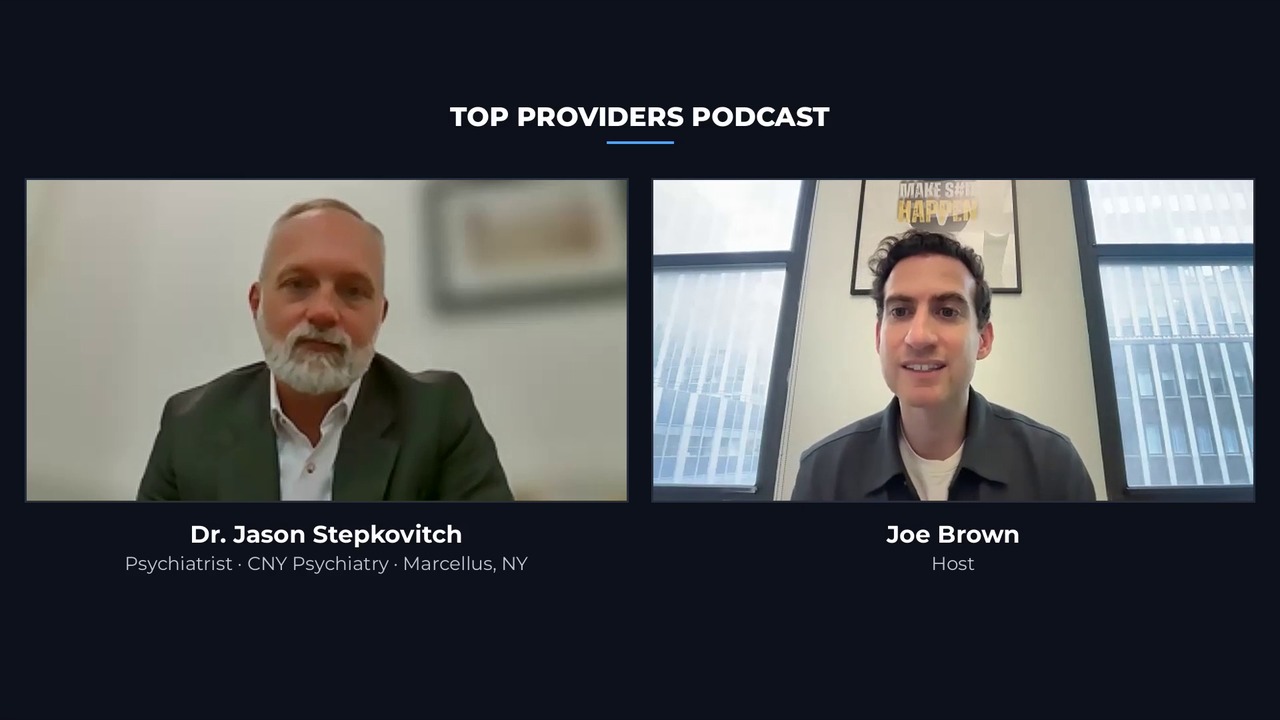
Tried two or three antidepressants and still don't feel like yourself? Joe Brown talks with Dr. Jason Stepkovitch, a psychiatrist at CNY Psychiatry in Marcellus, New York, about what to look for in a psychiatrist beyond a Google rating, how a psychiatrist, psychologist and therapist differ and where to start, what happens at a first psychiatry appointment, what "treatment-resistant depression" means and why it doesn't mean you're broken, options when medication hasn't helped, TMS (transcranial magnetic stimulation) in plain English, lessons from community mental health and the VA, what families should watch for in older adults, and small steps you can take this week, including light during upstate winters. He completed his psychiatry residency at SUNY Upstate, served as Medical Director of Cortland County Mental Health, worked at Hutchings Psychiatric Center and the Syracuse VA, and has been in private practice since 2012. CNY Psychiatry · 31 E Main St, Marcellus, NY 13108 · (315) 671-2140 · cnytms.com. Meet Dr. Stepkovitch on Top Providers: https://topproviders.com/providers/jason-stepkovitch. General info, not medical advice. If you or someone you love is in crisis, call or text 988 (Suicide & Crisis Lifeline), any time, or call 911 in an emergency.
- 0:00You are not broken
- 0:12What this episode covers
- 0:43Welcome & meet Dr. Jason Stepkovitch, psychiatrist
- 1:23What to look for in a psychiatrist beyond a Google rating
- 1:48Psychiatrist vs. psychologist vs. therapist: where to start
- 3:41What happens at a first psychiatry appointment
- 5:22What interventional psychiatry means
- 6:37Options when medication hasn't helped
- 8:19TMS in plain English and what a session feels like
- 9:59Lessons from community mental health and the VA
- 11:20Depression in older adults: what families should watch for
- 12:16One thing you can do this week
- 13:29Upstate winters and light therapy
- 14:04What he wants every patient to know
- 14:59Where to find CNY Psychiatry
For general information, not a substitute for advice from your own doctor.
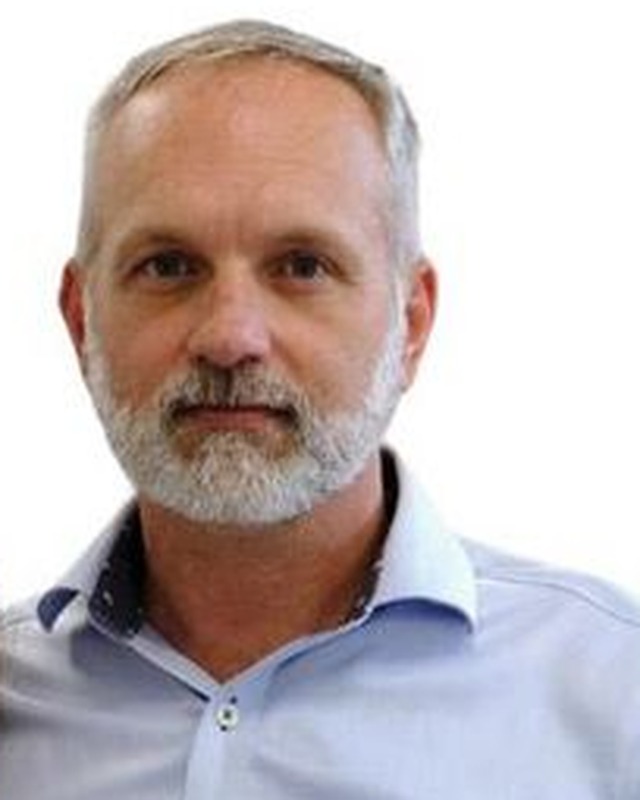
The guest
Booking details, hours and his full background live on his profile.
Clips from this episode
Under a minute each, cut straight from the interview.
 Shorts0:37
Psychiatrist, psychologist or therapist: who does what?
Dr. Jason Stepkovitch, a psychiatrist at CNY Psychiatry in Marcellus, NY, explains the difference. A psychiatrist is a physician who specializes in mental health: evaluation, diagnosis, medications and psychotherapy. A therapist provides psychotherapy, and that could be a psychiatrist, a licensed mental health counselor, a social worker or a psychologist. General information, not medical advice.
Shorts0:31Meds haven't worked? You're not broken
"Treatment-resistant" usually means someone has tried more than two antidepressants without enough relief. Dr. Jason Stepkovitch, a psychiatrist at CNY Psychiatry in Marcellus, NY, says it can feel like the system is telling you you're broken when standard treatments aren't working, and that's not the case. If you or someone you love is in crisis, call or text 988 (Suicide & Crisis Lifeline), any time. General information, not medical advice.
Shorts0:28What is TMS, in plain English?
TMS stands for transcranial magnetic stimulation. Dr. Jason Stepkovitch, a psychiatrist at CNY Psychiatry in Marcellus, NY, compares it to the gym: you wouldn't lift weights once and expect to feel stronger. It's a treatment you repeat. Ask your psychiatrist whether it fits you. General information, not medical advice.
Shorts0:27Depression in older adults isn't just aging
Depression in older adults often gets written off as just getting older. Dr. Jason Stepkovitch, a psychiatrist at CNY Psychiatry in Marcellus, NY, lists signs families can watch for: pulling away socially, fatigue, and changes in sleep. If you or someone you love is in crisis, call or text 988 (Suicide & Crisis Lifeline), any time. General information, not medical advice.
Shorts0:33Upstate winters and your mood
Short, dark days in upstate New York? Dr. Jason Stepkovitch, a psychiatrist at CNY Psychiatry in Marcellus, NY, suggests asking whether you're getting enough light, such as a light box used daily through the darker months. It isn't a replacement for standard treatment. General information, not medical advice.
Transcript
Host: Joe Brown. Transcript of the published edit. Times are episode time. Auto-transcribed; minor errors possible. General information only, not medical advice. If you or someone you love is in crisis, call or text 988 (Suicide & Crisis Lifeline), any time, or call 911.
0:00I think that there's like sadly like an implicit message within the system that you're somehow broken, when these more standard treatment options aren't working. And that's just not the case. So if you've tried two or three antidepressants and you still don't feel like yourself, you might think you're out of options. Dr. Jason Stepkovitch has spent more than 20 years in psychiatry in central New York from... Mental health clinics to the VA focused on exactly those patients. Today we're going to talk about what a psychiatrist actually does at a first visit, when to stop waiting and get help, and what TMS really is in plain English, so stay with us.
0:43So welcome to the Top Providers Podcast where you get to meet the doctor before you book. I'm Joe Brown. Today I'm with Jason Stepkovitch, a psychiatrist and the founder of CNY Psychiatry.
0:58Dr. Stepkovitch is trained in psychiatry at SUNY Upstate Medical University, served as the medical director in Cortland County Mental Health, worked with the Syracuse VA in Hutchings psychiatric center and has been in private practice since 2012, with more than 20 years in psychiatry. So Dr. Stepkovitch, thanks for joining us. Nice to meet you, Joe. Thanks for having me. Yeah, so what should someone look for in a psychiatrist outside of a Google rating?
1:28Well, I think obviously beyond expertise and I would hope we would all have that having gone through training, I think you want somebody that is going to be interested in getting to know you and is going to listen and take the time to ask the right questions questions, as well as somebody who's able to offer the treatment options that you need.
1:49A lot of people don't know the difference between a psychiatrist, a psychologist, and a therapist. So in plain English, who does what and who should meet with someone? Where should they go first? Oh gosh, that's a really, you think that that would be easy to Oh L - Let me start with what a psychiatrist is. So my definition is a psychiatrist is a physician who specializes in mental health, right? So a psychiatrist is trained in psychiatric evaluation diagnostic evaluation.
2:24Obviously we can prescribe medications, we can administer medical treatments, and we are also trained in psychotherapy.
2:32A counselor, well a therapist is somebody who administers psychotherapy. So that could be a psychiatrist, it could be a licensed mental health counselor, a social worker, or a psychologist.
2:44A psychologist is somebody with a Ph .D in psychology, they are not physicians, They have a lot of expertise and they bring a lot to the table but they're going to come from a slightly different angle and I think you had asked about you know where should somebody start.
3:02Listen I think I have a lot of respect for therapists in the area. And I think for people that are struggling with anxiety or mild depression, or, you know, call them like life conflict or existential conflict, I think it's perfectly acceptable to start.
3:22Care with, you know, with a psychotherapist, with a counselor.
3:27When things are progressing, however, or when you're getting into more moderate to severe symptoms, I do think that that's where psychiatrists come in. And, you know, that frankly is my area of interest at this point in my career working with those individuals. And for someone who's nervous about their first psychiatry appointment, walk through it. What actually happens there? Well my goal when I'm meeting with somebody for the first time, my primary goal is to get a sense of them as a person, right? And I think what people tend to do is they'll just sort of jump in to the problems, right? Or maybe they've been taking medications or they've... A lot of people have come from other clinics or maybe they've been getting medications through their primary care physician for years and they think that that's where they should my clinical thinking off of the person's life right? So I think the person should just be prepared to give a narrative of who they are give me a sense of who they are and I find that a lot of the you know much of the time you know the issues the problems just sort of organically from that story.
4:41But they should be prepared to talk about past you history, any comor any issues that may be impacting their mental health they should certainly be in talk about any treatments that they've already undertaken, whether it's talk therapy, medications, what worked, work, as well as very Hi of the problems themselves. And it's my job to tease through that with them, right? So, you know, I don't want patients feeling like there's this onus on them or a lot of pressure on them. That's our job as the as the experts, you know, to get the information from the patient. And you call CNY Psychiatry an interventional psychiatry practice for people who haven't gotten better with standard treatment. So what does treatment resistant actually mean, and what do you want those patients to hear?
5:37So, So there's not a firm definition on treatment resistant depression, but by and large, most of us would define treatment resistant depression as people who have failed more than two anti-depressants and that that actually stems from an old study you know called the STAR-D study from 2006 where they where they found in that study that by the time somebody gets to their third antidepressant trial, odds of clinical response plummet.
6:07And frankly, that's one of the reasons, probably the primary reason why CNY Psychiatry existed. And you had mentioned that I was a community-based psychiatrist. I had a private practice and I was increasingly finding that a large percentage of my patients were not responding to the treatments that I was offering.
6:30You know, and so that's what treatment resistance means: that you're not really responding well to psychotherapy and medications And besides medication, what are some other options do you offer people who haven't gotten better, and how do you decide what fits? It's great question. So, we offer in our clinic transcranial magnetic stimulation.
6:50[…] And the question of like how do we know what is the best fit for somebody is a really important one and I think it actually gets into both the mission of the clinic but you know I think what differentiates us a little bit.
7:12You know, when I'm meeting with a patient for the first time I'm I'm wide open you know like when somebody is coming in maybe they think they're treatment resistant, But maybe they haven't tried a certain uh be available in their current treatment team. I may make that recommendation just to return to their current plan, maybe tweak it a little bit.
7:35But much of the time yeah people are coming and they need more, uh, it starts with the psychiatric evaluation that appointment, you know, the patient may have an idea of what they're interested in.
7:49I will say a lot of the time the patient's right, but sometimes, you know, I may have a different thought, and they may walk in thinking, say, […] magnetic stimulation and we're going to spend time through that you know like spend a lot of time on patient education here and I'm going to walk the patient through my thinking and we'll have a discussion, a collaborative discussion, on developing that initial treatment plan before we move forward with an actual treatment. That's great. And take TMS. What is TMS in plain English? And what does a session actually feel like?
8:27So TMS stands for transcranial magnetic stimulation, and what we're doing with TMS is we are utilizing fields to you know, to use clinical terminology, neuronal depolarization. Basically, we're getting like, you know, millions of neurons firing in a synchronized fashion. And this really comes from a very simple premise that, you know, we've noticed in major depressive disorder, bipolar depression, post-traumatic stress disorder you characteristic blood flow patterns, or patterns of neural activity that parts of the brain are less active, particularly the left front part of the brain, a lot of the time we're stimulating that, the left dorsolateral prefrontal cortex and so we will put a magnet up to that part of the brain.
9:19Elicit again, neuronal firing and you know I tell my patients a can sort of like analogize it to you like like working out like going to the gym you know you're stimulating blood flow to that tissue right and so it's it's a it's a repetitive treatment. It's not something just like the gym. You wouldn't go and lift weights once You know feel stronger. It's something you have to do repeatedly and that is what we see with TMS. So there's different protocols, but the first the first treatment.
9:54Treatments, you know, that taper. And very safe, you know, very safe treatment as well And you ran Cortland County Mental Health and worked at the VA, so what did those years teach you about how people actually get better.
10:08What did they teach me about how people get better?
10:11Well, you know, listen I think that there's a lot of value in community mental health and I don't... Want for me having spent years in the system.
10:23Um, I, uh, uh, I became more and more invested in, you know, just really wanting to be able to offer people treatments that gave them an opportunity to succeed. And more and more of the psychiatrist in a community mental health setting is paid to do evaluations and prescribe medications, where we weren't really paid to do psychotherapy, right?
10:51And so you know I, I did find that a lot of my day was spent sitting with people's condition and there's a value in that. I have a lot of respect for that. Again, I. I did that for years and I took my job very seriously, but yeah, more and more I just felt many times like, boy, these folks just need more, you know, than what's being offered And I took my job, into this next CA, uh, yeah founding CNY Psychiatry. Yeah, and depression in older adults often just gets written off as just aging.
11:26What should families watch for? Oh, well, we call them neuro vegetative symptoms, right? So withdrawal, social withdrawal, withdrawal.
11:36Fatigue, you know, is the person's sleep off? Are they sleeping too much? Are they not, you know, or did they have a new onset? Insomnia is a different pattern, right?
11:49In older folks, they may notice even more than younger folks, issues with concentration and attention. Many times people feel like they're developing Alzheimer's disease when in fact, you know, it's actually disorder that they're developing. So it's not always, you know, an identification with depressed mood. You know, that's a mistake people make. That's true of younger people too. But yeah, particularly in the elderly. And for someone who isn't ready to book yet, what's one thing they can do this week that actually helps?
12:22Well, we all talk about this, but there's a lot of evidence on diet.
12:30The modified Mediterranean diet has been studied. It's probably not the only one that's helpful but has held up in comparison to anti-depressants in more mild depression but something I would strongly recommend staying active you know doubling down on exercise it's a it's a big ask to ask somebody with severe depression to do that but if they can motivate themselves to do that, they definitely should.
13:00Being socially connected as much as possible.
13:05You know, just the things that you would focus on living well. And there may be other things, there may be supplements that I'm not going to give a blanket recommendation for people. Getting your vitamin D checked if you haven't been to the doctor in a long time, you should probably do that. Is your thyroid off? We sometimes find those things. Those are very correctable and that can cause depression in people.
13:29We live in Syracuse, New York.
13:31It's getting dark here it's going to snow a lot soon you know are you getting adequate sunlight?
13:38I would really recommend for a lot. I would say if you have depression and you live in Syracuse or in the upstate New York area, get a full spectrum lightbox that's 10,000 lux something that you should probably be doing every day, and I recommend to my patients to do that from, you know, October really into March.
13:56Those aren't necessarily replacements for standard treatments, but they're important. Those are things that we can all be doing the And the last question I have for you, so after more than 20 years . Central New York, what do you want someone to understand before they walk through your door or give you a call? What do I want them to understand? That's a very open-ended question.
14:19Well, I want them to understand that there's hope, you know, and I, yeah, I guess that's the biggest thing. A lot of our patients have been in the system you know and again that comes from my previous world and just because you've in talk therapy, just because you know you've seen a mental health provider. Maybe you've been getting antidepressants from your primary care.
14:42It's easy to believe and I think that there's like sadly like an implicit message within the system that you're somehow broken, when these more standard treatment options aren't working. And that's just not the case. That's great, that's great.
14:59Well for anyone in Marcellus, Auburn, across central New York. That's Dr. Jason Stepkovitch, a psychiatrist and the founder of CNY Psychiatry.
15:12They're located at 31 East Main Street in Marcellus, New York. You can call the office at 315-671-2140 or visit cnytms.com. You can find Dr. Stepkovitch's profile on topproviders.com, and if you or someone you love is in crisis, call or text 988 at any time.
15:40Dr. Stepkovitch thank you for being here, and if you found this helpful subscribe to the Top Providers Podcast where you can meet your next doctor before you book. I'm Joe Brown, thanks for watching.