Dr. Marie Starling, Functional Medicine Practitioner | Labs Normal But You Still Feel Awful?
with Dr. Marie Starling · Functional Medicine Practitioner, The Healing Center Denver, Centennial
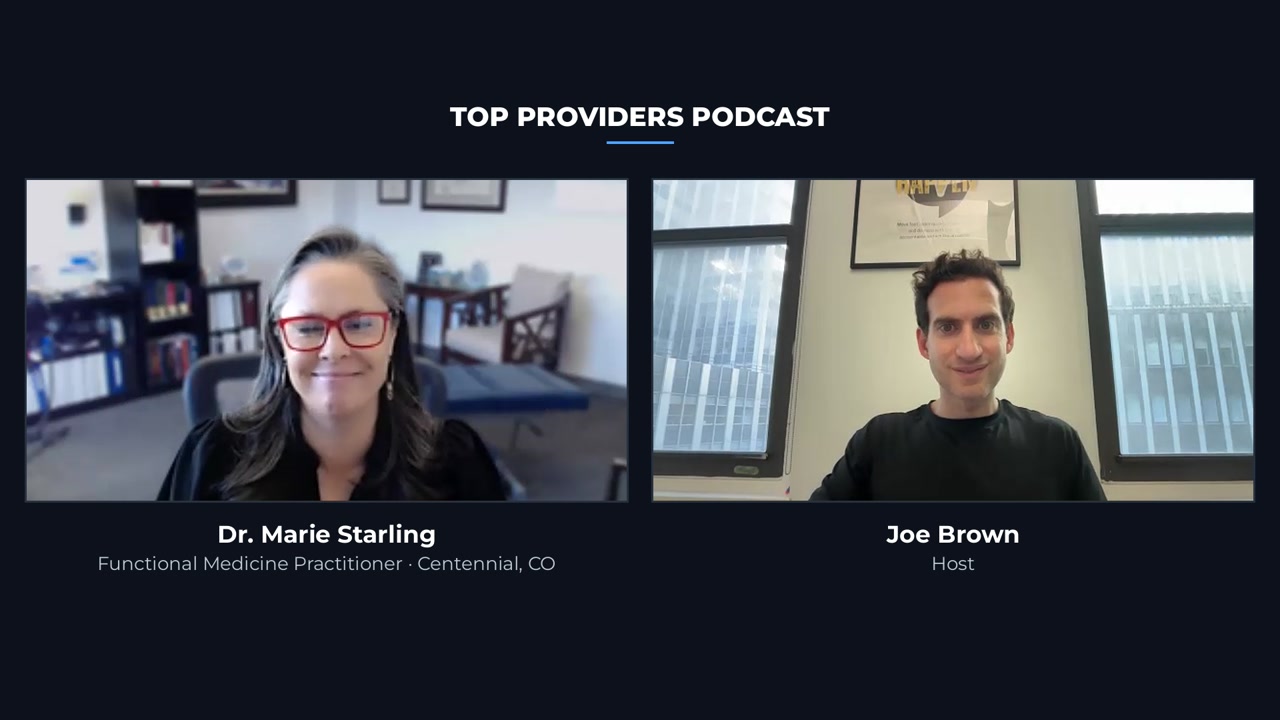
Dr. Marie Starling, a functional medicine practitioner and founder of The Healing Center Denver in Centennial, CO, explains what to look for in a functional medicine practitioner, what functional medicine is in plain English, what to do when your labs come back normal but you still feel awful, what happens at a first visit, why your gut matters for energy and mood, what women in their 40s and 50s should know about menopause and hormones, why so many patients don't feel heard, and what to expect along the way. The Healing Center Denver · 6300 S. Syracuse Way, Suite 280, Centennial, CO 80111 · (303) 721-9800 · thehealingcenterdenver.com. Meet Dr. Starling on Top Providers: https://topproviders.com/providers/marie-starling. General information only, not medical advice.
- 0:00Getting to the root of the issue
- 0:05What this episode covers
- 0:34Welcome & meet Dr. Marie Starling
- 1:01What to look for in a functional medicine practitioner
- 1:45What functional medicine is, in plain English
- 2:40Labs normal but you still feel awful?
- 3:35What happens at your first visit
- 4:05Why your gut affects energy and mood
- 5:21Women in their 40s and 50s: menopause and hormones
- 6:23Why so many patients don't feel heard
- 7:10How long before you start to feel different?
- 7:46What she wants every patient to know
- 8:46Where to find Dr. Starling
For general information, not a substitute for advice from your own doctor.
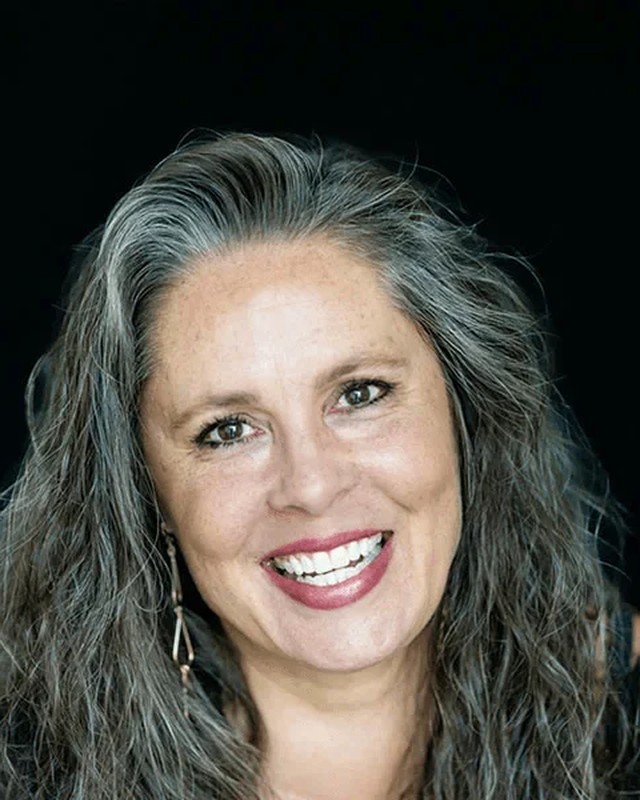
The guest
Booking details, hours and her full background live on her profile.
Clips from this episode
Under a minute each, cut straight from the interview.
 Shorts0:26
Labs "normal" but you still feel awful?
Told your labs are "normal" but you still feel awful? Dr. Marie Starling, a functional medicine practitioner, explains that standard labs mostly look for disease, like diabetes, kidney problems or liver failure, and can miss the "I don't feel good and something's wrong." General information, not medical advice.
Shorts0:29Functional medicine, explained in 30 seconds
What is functional medicine? Dr. Marie Starling, a functional medicine practitioner, describes it as getting to the root of the issue and restoring function: not holistic, not alternative, not traditional, but functional, looking at how the body works. General information, not medical advice.
Shorts0:33Why your gut affects your energy and mood
Why does your gut matter for energy and mood? Dr. Marie Starling, a functional medicine practitioner, explains that gut bacteria make neurotransmitters and vitamins, and that the gut is the barrier between the inside of your body and the outside world. General information, not medical advice.
Shorts0:34Women in your 40s and 50s: you're not imagining it
Tired, moody, weight creeping on in your 40s and 50s? Dr. Marie Starling, a functional medicine practitioner, says menopause is not a disease: when hormones drop, other systems in the body are meant to help take over. Hormone support may be part of it, and so are the fundamentals underneath. General information, not medical advice.
Shorts0:30Why so many patients don't feel heard
Why don't so many patients feel heard? "It's not that your doctor doesn't care or that they're not smart. It's that they're limited in time," says Dr. Marie Starling, a functional medicine practitioner, who focuses on taking the time to listen to the whole story. General information, not medical advice.
Transcript
Host: Joe Brown. Transcript of the published edit. Times are episode time. Auto-transcribed; minor errors possible. General information only, not medical advice.
0:00So functional medicine is getting to the root of the issue and restoring function.
0:05So have you ever been told your lab work is normal when you know something isn't right? You're tired all the time, foggy, or your stomach's a mess and nobody has an answer? Well, Dr. Marie Starling has spent more than 30 years in Denver helping people who've heard you're fine one too many times. Today, we're gonna talk about what functional medicine actually is, what happens at your first visit, and what you can do this week to start feeling better. So stay with us.
0:34So welcome to the Top Providers podcast where you get to meet the doctor before you book. I'm Joe Brown. Today I'm with Dr. Marie Starling, a functional medicine practitioner and the founder of The Healing Center Denver in Centennial, Colorado. So Dr. Starling has advanced training in clinical nutrition and acupuncture and has been caring for patients in Denver for over 30 years. So Dr. Starling, thanks for joining us. You're welcome, nice to be here.
1:01So first question I have for you is, what should someone be looking for in a functional medicine practitioner? That's a great question, actually. What people should look in for functional medicine providers actually is someone who really has a full systems view. If you don't look at the microbiome and you don't look at blood sugar issues and you don't look at food and you don't look at nutrient deficiencies in mold toxicity, possible Lyme infections or bacterial viral fungal or parasite overgrowth or metabolic dysfunction or microbiome, or I'm sorry, or mitochondrial dysfunction, then you're not looking at everything.
1:37And what happens is you just deal with food or you just take this drug or you just take this supplement and then you don't really get to the roots of the issue.
1:45A lot of people have heard functional medicine and have no idea what it is. So in plain English, what is it? And how is it different from a regular doctor's visit? Yeah, so functional medicine is getting to the root of the issue and restoring function, right? So it was created by Dr. Jeffrey Bland, who's a PhD and with this five other doctors and they said, what is this that we're doing? And it's not holistic totally, it's not alternative really, it's not traditional, it's functional. And that means looking at how the body works and restoring function.
2:18Because if you have a symptom, if you have type two diabetes or if you're getting, if you have neurocognitive decline or you have bloating or menopause symptoms, it doesn't really matter what the symptom is in the sense that it's on top of dysfunction at foundational levels. And when you look at that through this whole lens, then you can make changes that actually move the needle.
2:40That's great. And for, you say you treat people, not lab numbers. So what do you tell someone who's been told everything is normal, but they still feel awful? I'm sorry. I'm so sorry you had to deal with that. I am often the place where people end up after they've seen three to five doctors in all the fields. I specialize in these really complex cases, but also easy cases. But often when we run labs, those are looking for pathology only. So like we do a comprehensive lab panel on all our patients.
3:11We also look at microbiome panels. That's what's living in the gut. We also look at full pathway hormone panels or adrenal panels. So general labs, it's just that little tiny picture of do you have diabetes? Are your kidneys working? Is your liver in failure? And so it looks only for those acute pathological conditions. So it misses, I don't feel good and something's wrong.
3:36And for someone nervous about coming in, walk them through what their actual first visit is like. So we do a really comprehensive intake. So the initial exam is where we do a very thorough history. So we actually get through every symptom that's going on in the body, as well as a past history, a full record review. We do a physical exam in addition to these are the labs that we need to run to see what's the fine points of those issues.
4:05That's great, and you talk a lot about gut health. So why does the gut matter for things that don't seem related, like energy or mood? Yeah, that's a good question. So your microbiome is bacteria that live in the GI tract and they are symbiotes with you, they're your friends. They make neurotransmitters, they make vitamins, they make minerals, or not minerals, but molecules that are necessary for the whole system of your body, for your brain, for the gut, for the cells of your colon.
4:35They turn on and interact with your genome. They tell your brain, hey, eat more of this food. So they're super important, and they also inhibit overgrowth of other bacteria and fungus, as well as inhibit parasite activity. And so what happens is, is there's a barrier between the inside and the outside world. And that barrier is the gut. And if your gut, you think of it like a tube, if that tube is intact, you can eat anything and nothing gets through, but that tube is the barrier. And that barrier is the same as perhaps, is the same barrier as in the brain. So if you have a leaky gut because of inflammation or antibiotics or chronic stress, or you got sick or whatever the issue is, you're gonna have inflammation affecting the brain, but also the whole body.
5:15Chronic inflammation is really detrimental to the body. and that really begins with the gut microbiome.
5:21A lot of women in their 40s and 50s feel like they've lost themselves. They're tired, moody, weight creeping on. So what do you want them to know? That menopause is not a disease, but it is a problem if you don't have healthy adrenals. So remember the body is a systems like approach, right? So when we go through menopause and hormones drop, right? because our ovaries shut off, that's normal, but our adrenal glands should be able to take over.
5:52But if we have had chronic blood sugar issues, meaning like you get shaky, jittery, lightheaded, irritable if you don't eat or you crash and get tired after you eat or slump in the afternoon. So when that happens, your adrenals are supposed to take over your hormone production. And when they can't, then we drop our hormones. And then we start having these symptoms that come along with menopause. And you do need hormones to support that, but you also have to fix the fundamentals of what's letting that system actually dysfunction or you're gonna end up in the same problem with bigger problems, you're just kicking the can down the road.
6:23I noticed that a lot of your patients say they finally felt listened to. So why do you think so many people don't feel heard by doctors? And what do you do differently? Yes, it's not that your doctor doesn't care or that they're not smart, it's that they're limited in time. And in functional medicine, we take the time to actually listen to the whole process of what's going on and actually do the questioning to get to the roots of the issue and really unravel what's hidden.
6:54And so what happens is people feel heard as a result of it because we don't go, well, your thyroid's fine, so you must be fine, or your labs look normal, so you must be okay, or this is in your head because it's never really in your head, not really. So we listen to people and they feel heard.
7:10Yeah, I was gonna ask you about how long it usually takes before someone starts to feel different? And what should they expect along the way? Because we're so comprehensive and customized, we have to build everybody's protocol from the ground up and everybody gets a unique one. There's some foundational pieces that are the same. Like we have to figure out food, we have to balance blood sugar, we have to rebuild the microbiome. But the problem is there's never one size fits all and people can have the same symptom and have 10 different causes. So doing that comprehensive customized protocol process is really important.
7:40No matter where you go and having all of it looked at also really important.
7:46That's great. And the last question I have for you, so after more than 30 years of taking care of patients in Denver, what do you want someone to understand about your practice before they walk through your door or they give you guys a call? Yeah, so for people that this approach appeals to, you just know that there's gonna be a part that they have to do. This is, our patients have to do the hard work. We're going to show them what to do and walk them through every step. When people come in and they're starting to experience really complex issues, they need to know this isn't, I'm going to give you a pill and you're going to be better. This is, we're going to rework your whole body and stop the trajectory that's going to push you off the cliff and start walking up the hill and rebuilding the system. That means it's going to take some work and diet and supplements and maybe drugs and it's going to take things. It's going to take some effort. That's okay. But you got to know it.
8:46Well, for anyone in Centennial, Denver, Greenwood Village, Littleton, and across the South Metro, that's Dr. Marie Starling, functional medicine practitioner and the founder of The Healing Center Denver. They are located at 6300 South Syracuse Way Suite 280 in Centennial. You can call the office at 303-721-9800 or visit thehealingcenterdenver.com and you can find Dr. Starling's profile on topproviders.com. Dr. Starling, thank you for helping people feel heard and if you found this helpful, subscribe to the Top Providers podcast where you can meet your next doctor before you book. I'm Joe Brown. Thanks for watching.