What to Look For in a Dentist & Why Saving Your Teeth Matters | Drs. Casey, Terence & Kayla Lau, Dentists
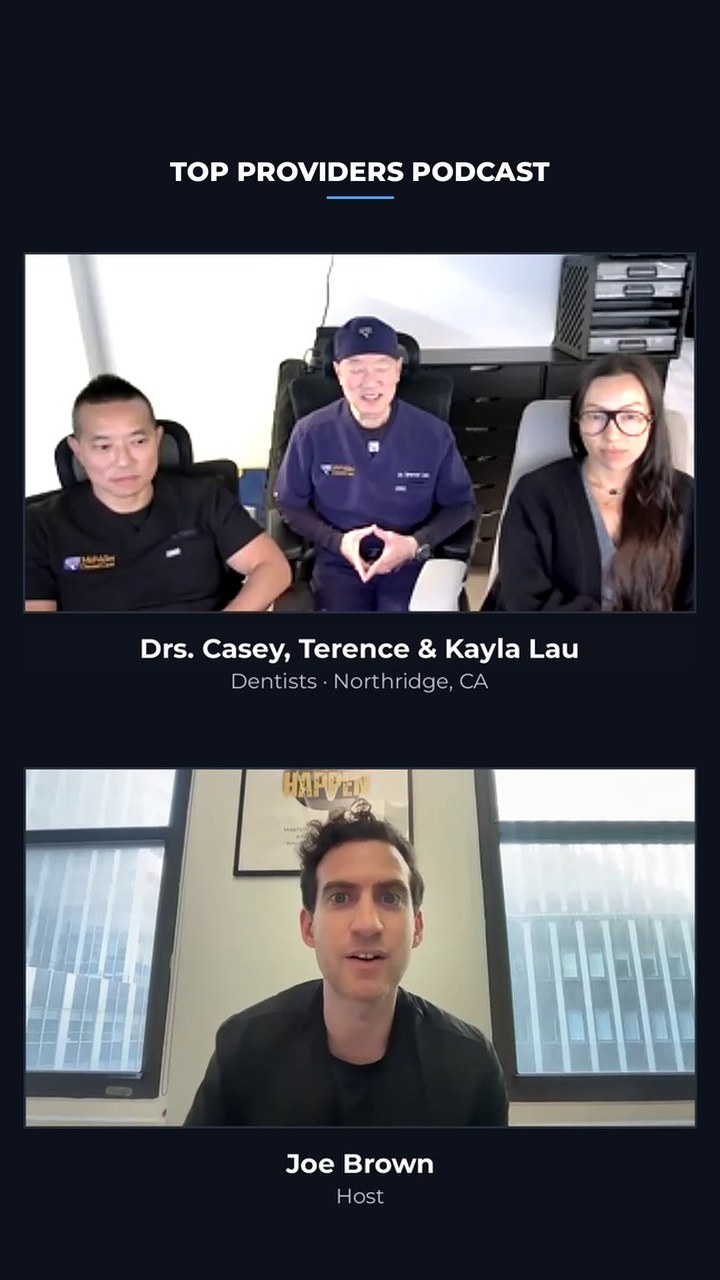
with Dr. Casey Lau, Dr. Terence Lau & Dr. Kayla Lau, Dentists · Mid-Valley Dental Care, Northridge
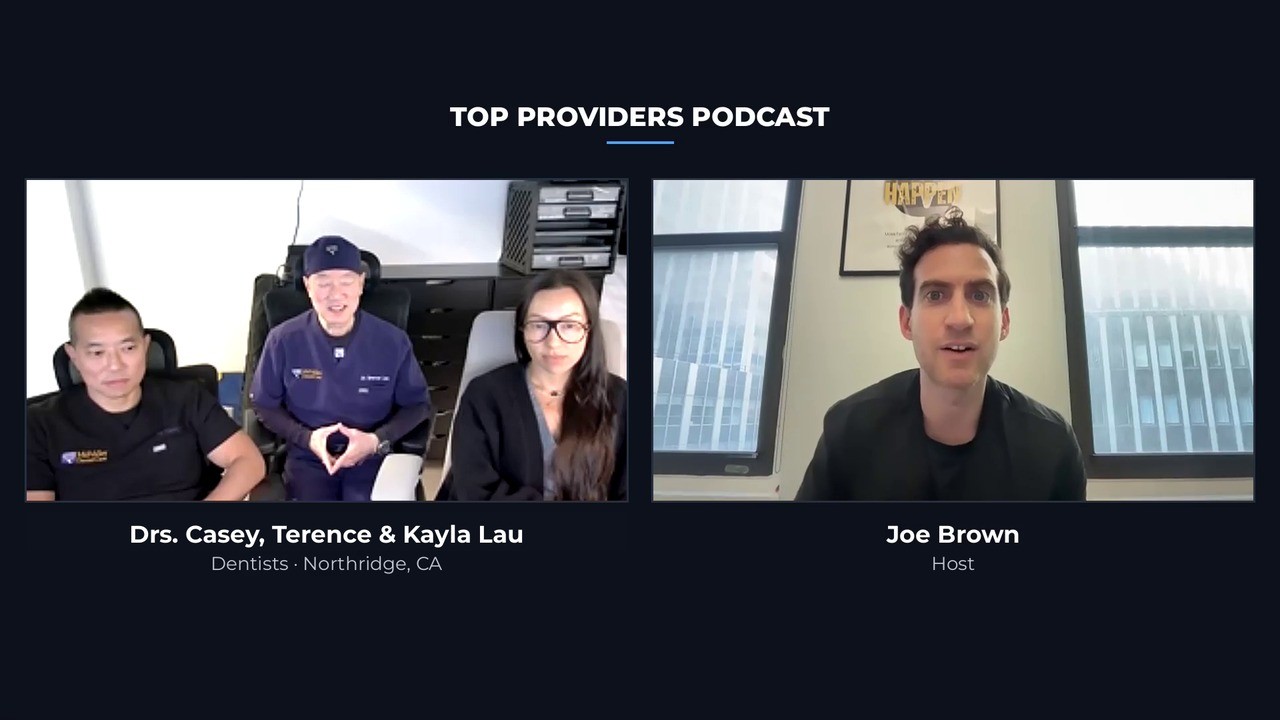
How do you know you've picked the right dentist? Joe Brown talks with three dentists from Mid-Valley Dental Care in Northridge, California: Dr. Casey Lau, Dr. Terence Lau and Dr. Kayla Lau. They cover: - What to look for in a dentist: trust, and a dentist who explains what they see - Why three dentists in one practice means three second opinions in one place - What happens at a new-patient visit - What working as a hygienist taught Dr. Kayla Lau - The early signs of gum problems most people ignore (they usually don't hurt) - Why losing a back tooth puts your front teeth at risk - What dentists notice when they see patients over the years - Protecting athletes' teeth with a sports guard - Everyday habits, like grinding, that wear teeth down This episode is for general information and isn't a substitute for advice from your own dentist. If you have pain, swelling or a dental concern, talk to a qualified provider. In an emergency, call 911.
- 0:00Three second opinions in one place
- 0:06What this episode covers
- 0:28Welcome & meet Drs. Casey, Terence & Kayla Lau
- 1:30Three Dr. Laus in one practice
- 2:12What to look for in a dentist
- 4:43What happens at a new-patient visit
- 6:44What hygiene taught Dr. Kayla Lau
- 7:48Early signs of gum problems
- 9:25Why replacing a lost tooth matters
- 11:43Seeing patients over the years
- 14:20Protecting athletes' teeth
- 15:24Everyday habits that wear teeth down
- 16:48One thing to remember
- 17:48Where to find Mid-Valley Dental Care
For general information, not a substitute for advice from your own doctor.
The guests
Booking details, hours and full backgrounds live on each profile.
Clips from this episode
Under a minute each, cut straight from the interview.
 Shorts0:21
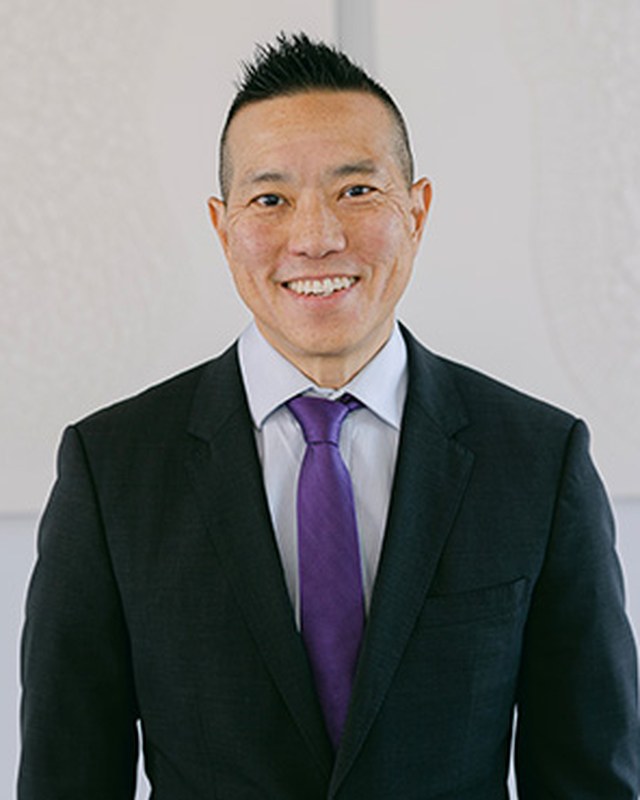
Three dentists, three second opinions
Looking for a dentist? Dr. Terence Lau, a dentist, explains how having three dentists in one practice means three second opinions in one place, and how they collaborate. General information, not medical advice.
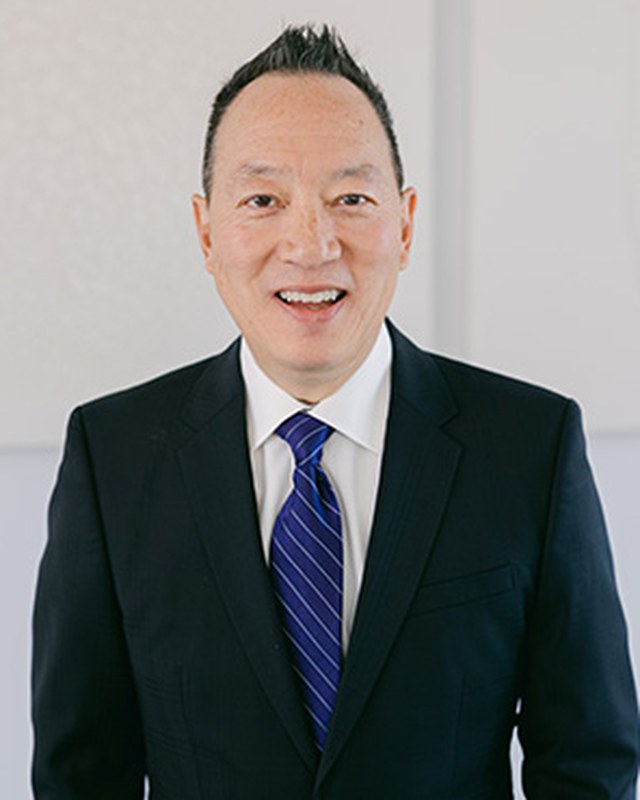
Shorts0:29The gum problem most people ignore
Gum problems usually don't hurt. Dr. Terence Lau, a dentist, explains the signs to watch for, like gums that are puffy or bleeding, and bad breath. General information, not medical advice.
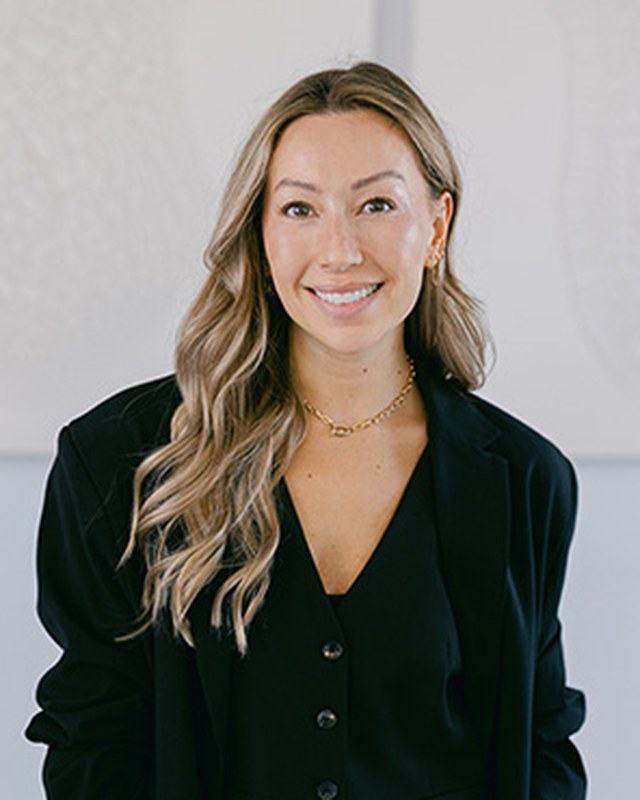
Shorts0:35Why losing a back tooth puts your front teeth at risk
Lost a back tooth? Dr. Kayla Lau, a dentist, explains that back teeth are built to take the force of chewing, while front teeth have a single root, so a missing back tooth can put extra load on the front. General information, not medical advice.
Shorts0:33What your kids' teeth can inherit
A lot of your dentition is partly genetic. Dr. Casey Lau, a dentist, explains how habits like grinding can show up as similar wear patterns in parents and their kids. General information, not medical advice.
Shorts0:20What every athlete should know about their teeth
Athletes and sports parents: Dr. Kayla Lau, a dentist, explains why a sports guard is worth wearing, especially for contact sports, as a simple preventive step. General information, not medical advice.
Transcript
Host: Joe Brown. Transcript of the published edit. Times are episode time. Auto-transcribed; minor errors possible. General information only, not dental advice.
0:00And the best thing is that you have three different second opinions right here in one place. Three dentists, one last name, one family practiced in Northridge. Today, Dr. Terence, Dr. Casey, and Dr. Kayla Lau of Mid-Valley Dental Care talk about what to look for in a dentist, why saving your natural tooth matters, and the everyday habits that are quietly wearing your smile down. So stay with us.
0:28So welcome to the Top Providers podcast where you get to meet the doctor before you book. I'm Joe Brown. Today I'm with the Lau family of Mid-Valley Dental Care in Northridge, California, a family practice that has cared for Northridge for more than 30 years and is the official dental practice of CSUN Athletics.
0:47Dr. Terence Lau He studied at CSUN, earned his dental degree at USC, and did advanced training in gum and implant dentistry at the University of Washington. Dr. Casey Lau earned his biology degree and his dental degree at UCLA, and he's been at the practice since 2002. Dr. Kayla Lau started her career as a dental hygienist after studying dental hygiene at USC and then went back to USC for a dental degree. Today, she has a special passion for fixing teeth in a way that saves as much as your natural tooth as possible. So Dr. Casey, Dr. Kayla, Dr. Terence, welcome to the show. Thank you. Welcome to you. Welcome to our practice. So the first question I have for you guys, you know, you know there's, and this is maybe directed to whoever wants to get to it, but there are three Dr. Lau's in one practice. So how does that work? And how does a patient know who's who and what you guys do?
1:45Well, the way it all started was there was no other Dr. Laus in the practice and then there was. So they originally just called me Dr. Lau. So when Casey came on board, it became Dr. Casey. When Dr. Kayla came on board, and it became Dr. Kayla. And I remained Dr. Lau, although I kind of was pushing yes to that for a while, but... I think it stuck.
2:11That's great. And So when someone's looking for a dentist, what should they be looking for? Yeah, I mean, I feel like going to a dentist is a pretty intimate event, and for us anyway, we try to be as authentic as we can when we're diagnosing and explaining we want patients to kind of understand things the way we understand it and try to be you know as involving with the diagnosis, with the patient as we can, so that they understand what's going on and that they feel like, you know, they're getting the treatment they deserve. The most important thing for this relationship is trust. So you have to be able to come in and understand what is happening, what your needs are, the options are and understand it and trust that you're getting the best treatment that you and the doctor feel is going to be in your best interests. We want to make sure that you understand everything. Dentistry is not rocket science, so we try to educate you along the way. We have a lot of different accoutrements, different instruments and technologies that help you visualize your needs the way we see it. so we what he was saying is we have a lot of newer diagnostic tools and with that we are able to show patients a lot of what we're finding and it's not just, we're calling... out things that we think need to be done. We're doing more than that. We're calling them out We're showing the patient. This is why we're diagnosing this is why we're treatment planning that and sometimes that can feel like a lot of information and it is But at the end of the day it really helps our patients to understand Why we're diagnosing and it does build that trust and always happy to have someone go get a second opinion anywhere, and I think we all are because we're quite confident And think of that. And the best thing is that you have three different second opinions right here in one place. So we all collaborate and you know we make sure that what we're seeing and what we're explaining to the patient is exactly what the needs are. That's great. And for someone who's been, you know, hasn't been to the dentist in years and feels embarrassed about it, what actually happens at a first visit with you guys? We have them come in for cleaning first and foremost, but before that, we take our records. So that'll include typically full mouth set of x-rays just so we can make sure there's not on any glaring issues or anything we're missing. And on top of that, we take what's called It's a 3D scanner that helps us show our patients what's going on in their mouths, whether they're going to look in the mirror or you know whatever it is certain angles they're not able to see and that's also another diagnostic tool that we use because not only is it a three-dimensional representation of them, but it has other diagnostic tools added and it's not just a visual, here's what you look like, but it has near infrared technology and that's also good at finding cavities that sometimes are or aren't seen on x-rays. Then we start with other data collecting like like probing depths and things to measure the health of their gums and they get their cleaning. one of us will come in and do a full treatment plan and diagnosing with them. Yeah, we basically want everyone to get kind of a baseline of information, how they entered our practice, And that way we can kind of have something that we can always refer back to, see what kind of progress patients are making it's nice because for for what she was saying, it captures an actual image of what is going on. It's a three-dimensional image of what's going on. And most importantly, we want to get to know you, we want you to get to know us, and we want to make sure that... your needs are voiced you can get what you're, what you need and, what we have diagnosed your needs to be too. So the most important thing is just to come in for the first visit to get to know us. That's great. That's great. And Kayla, you, Dr. Kayla, you started as a dental hygienist. So what did cleaning teeth teach you that you still use with every patient today? I didn't practice very long. I did most of my practicing when I was in school and then I did a few sessions here at the office. But I mean, what I hold true always is the importance of hygiene. I mean, it's the foundation and both of these, other, both of them are also very, they see the value in that and I we all three don't just look at teeth. we look at the whole picture and the foundation which they stand in. So that's the gum, the bone, the ligaments all surrounding it. And our dental work won't last our patients as long as it could if they don't have the proper foundation to begin with.
7:41and there's not any things that we need to take care of prior to us addressing the more dental concerns. That's great. That's great. And Dr. Terence, you trained in gum and implant dentistry. So what's the early sign of gun problems that most people ignore? Well, Gum problems don't hurt, so that's the main thing when people come into the dentist, they have no pain, they have no real that they recognize, but gums that are puffy, gums that bleed when you floss, not only when you brush, but you know that bad breath is another indicator and all the bases. basis for the support for your teeth is is the gums and. bones. So we start from the ground up, make sure that's healthy. and then go from there We want to make sure that the gums, the support, the bones help. Yeah, it's something we hear a lot, actually, you know, sometimes I like the patients will say sometimes I bit so I kind of try not to do, you know, I'm thinking I'm doing too much and so I just don't floss and you know that's kind of the it's kind of the opposite thing you're supposed to do. We want you to try to keep the inflammation down and the more bleeding that you have, that's the bigger indication that you actually have active inflammation. So that's kind of the big, the big issue now. and it's actually why a lot of people don't floss make Makes sense. And if someone loses a tooth, why does it matter whether they replace it?
9:30Well, yeah, that's a big one. I mean, when you don't have teeth, the remaining teeth, they're working harder. You know, obviously you're asking them to. do more.
9:42Things will move around if you leave if you leave spaces. and and really you know it if you allow the dentition to get worse and worse, then you you really don't have the the best pathway to the nutrients that you need to keep yourself healthy. And right now, everything is all about how do we stay healthier? How do we live longer? How do we help live our healthiest life?
10:16And really, it all starts with in our body and how we're digesting it. And that's all your teeth. Your ability to chew, your ability to eat, your ability to nourish yourself is very important. And when you lose one tooth, the other teeth shift around to close the space, open up the right spaces, fall into places where there's no teeth and then everything changes and then the bite and the jaw get thrown off and then there's more repairs that have to be made. Yeah also something to think about people are very afraid to lose their front teeth and when they lose their back teeth it's not so much of an issue in their minds because it's not playing on the aesthetics but a lot of the times when that happens I mean you have to think about the design of the teeth how we were formed and how we were made to be. The back teeth are designed to take all if not most of just all the force that we're putting on them. So when we only have the front teeth, that puts way too much force on them. They're only one rooted. There's a lot less surface area. There's not a lot holding them into bone the way and the back teeth are. So it's really important to maintain that and if you don't maintain that, you will lose those front teeth eventually because they're just not designed to take that.
11:43That's great. That's great. And Dr. Casey, a question for you. When a whole family sees the same practice for years, what does that let you catch that a one-time dentist would miss? Oh yeah, no, for sure. So, you know, interestingly, a lot of your dentition is genetic. So we'll see patients that, for instance, have a lot of attrition, they grind their teeth quite a bit, and lo and behold, now their kids are coming to us, and we'll see the same thing starting to happen. And maybe on the parents, we were worried about how much damage was being done to their enamel, or are they losing bone, gums and bone from how much force they're putting on their teeth? And I'll start to see it on their kids. And right away, we'll say, Hey, you know, I know this is how you you've been going along this whole time, but you know, maybe we can address that on your kids and make their teeth healthier and last longer. And so that's something that that's really good when we have multiple generations in a dental practice. And even on a one-to-one basis, when a patient sees us for a long period of time, we can understand their habits, their histories, their needs, and make sure that we're preparing for the future. We're not just thinking about what's broke today, but we can see what's on the way for the future. And we want to make sure that they keep their teeth for the life, their lifetime. And as Dr. Casey said, you know, knowing what happened to the parents will give us a good indication on what's going to happen that we want to prevent for the children. So we see multiple generations of, you know, of families in this practice. We've inherited practices that are all the way back from the fifties. 50s and my previous partner was from the 70s so we've seen patients that stayed with their dentist since they were five and are, you know, 70 years old. right now, or older. So, you know, it's a long history, and that history is important to keep them in one place so that you can keep on generating that health throughout your life and throughout your children's life.
14:20That's great. That's great. And you guys are the dental practice for Cal State Northridge athletics. So what should athletes and sports parents know about protecting their teeth?
14:31Wear a sports guard, especially for contact sports. And the athletes don't like to hear that and they don't like to do it, but once they have trauma and they have an issue, they they regret not doing that. It's preventative and we offer that to all of the athletes. We're all giggling because it's one of the mantras in our office and it's one of the hardest things to establish among athletes, even though you see so many athletes, professional athletes, wearing mouth guards now, I see it in hockey, I see it in basketball, and yet it's so difficult to get an athlete to transition to something until they they have, you unfortunately, know, unfortunately, until they have trauma. Right. So we, we want to prevent reinvent that obviously. obviously, but, um, that's kind of the, best thing we can do. So I got my next question for you guys is what's what everyday habit hurts people's teeth more than they realize?
15:31Grinding. Sleep apnea. Gum chewing. Ice chewing. Ice chewing. So bad. So, bad.
15:39Not flossing. flossing. Well, yeah, that one's more obvious, but yes, definitely. Yeah, on a day to day, people clench and grind and they don't even think about it, you know, and people kind of go, oh, you know, I went to a dentist and they told me I grind at night but I don't think I grind at night. And the truth is not everyone grinds at night and we don't really know, we're not with you at night. But what we see is the the damage that's done to the teeth. So you know really it's the it's the day-to-day functioning and how hard we're putting these forces on the teeth. So we if we can do something to kind save that off right then we get to keep our teeth longer. And a lot of it stems from the position of your teeth. So we can move your teeth orthodontically with braces to put them in a better place. So you don't necessarily have to wear a piece of plastic in your mouth during the and still be able to protect your teeth if we help you do things right. That's great, that's great. And the last question I have for you guys, if you have one line each, what do you want a patient to know before they walk through your door or give you guys a call?
17:00We're here for you. We want to listen to you. We want to hear your needs and get to know you. That was one sentence.
17:11That was one long word.
17:16Okay.
17:18You say listening.
17:20I'll say caring.
17:22And you say explain. I think bottom line is, we want to be part of your family as we want you to be part of ours. I think my line would be, we're here to help you. and we are grateful that you put that trust in us. Come and get to know us. That's great. Well, listen, for anyone in Northridge or Porter Ranch or Granada Hills, across the San Fernando Valley, that's Dr. Terence, Dr. Casey and Dr. Kayla Lau of Mid-Valley Dental Care. The office is at 19331 Business Center Drive in Northridge, you can call or text the office at (818) 886-3500 or visit midvalleydentalcare.com or you can find them on topproviders.com So thank you guys all for joining me. If this helped, make sure to subscribe to the Top Providers podcast, where you can meet your next doctor before you book. I'm Joe Brown, and thanks for watching.